
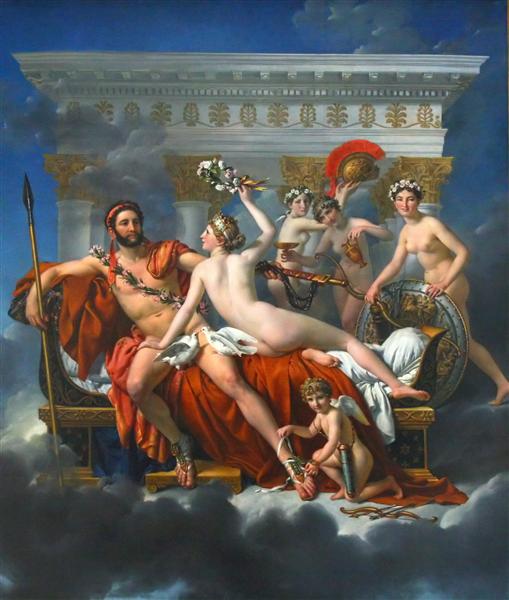
Title: Mars Disarmed by Venus and the Three Graces
Author: Jacques-Louis David
Year: 1824
Style: Neoclassicism
Genre: mythological painting
Media: oil, canvas
Location: Royal Museums of Fine Arts of Belgium, Brussels, Belgium

Title: Mars Disarmed by Venus and the Three Graces
Author: Jacques-Louis David
Year: 1824
Style: Neoclassicism
Genre: mythological painting
Media: oil, canvas
Location: Royal Museums of Fine Arts of Belgium, Brussels, Belgium
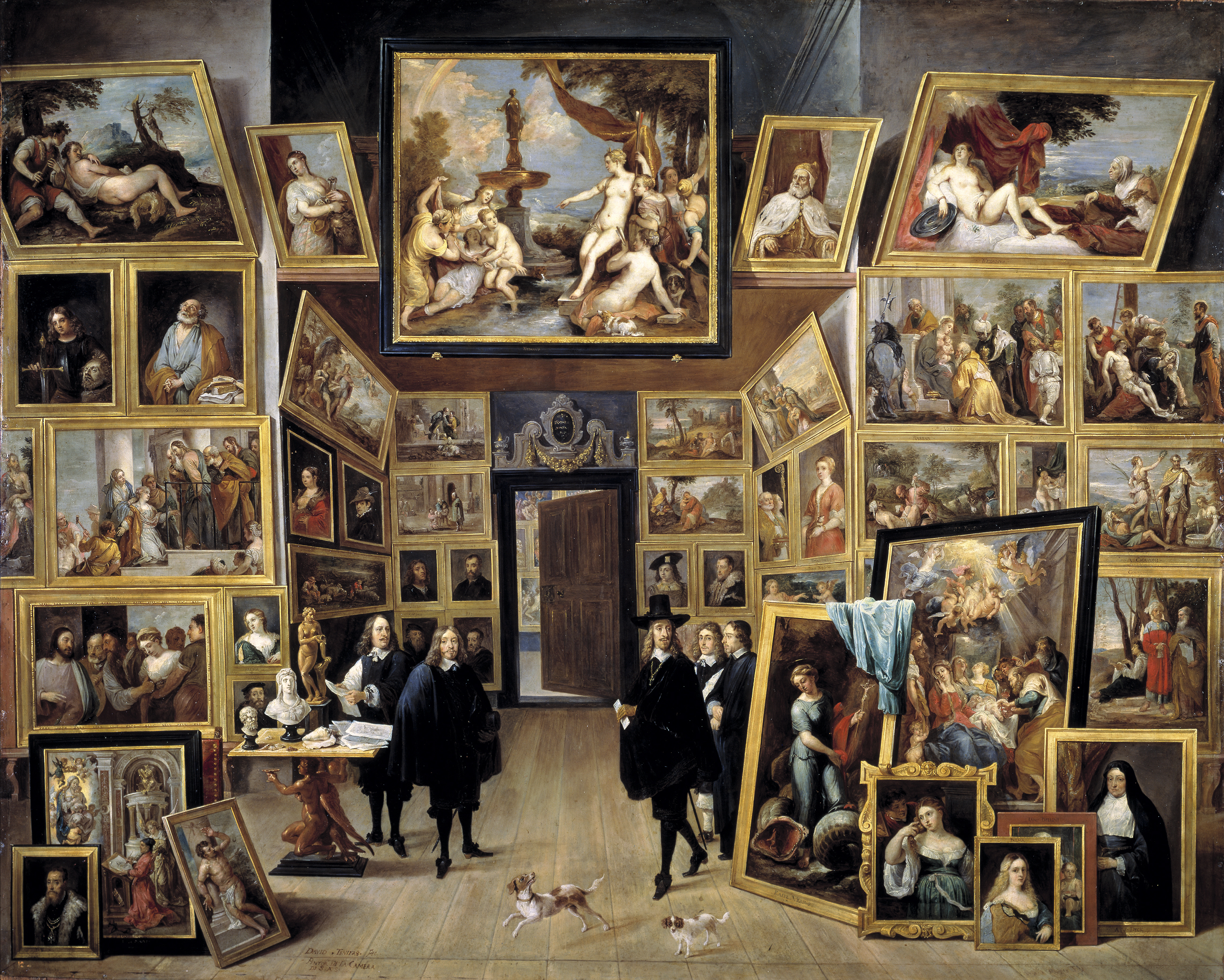
Title: The Archduke Leopold Wilhelm in his Painting Gallery in Brussels
Author: David Teniers the Younger
Year: 1651
Medium: oil on copper
Location: Prado Museum, Madrid
Title: Mona Lisa
Author: Leonardo da Vinci
Year: 1503
Subject: Lisa Gherardini
Location: Louvre Museum
The “Gioconda” or Mona Lisa is quite possibly the most well-known piece of painted artwork in the entire world. It was painted by the Leonardo Da Vinci, the famous Italian artist, between 1503 and 1519, and is a half body commission for a woman named Lisa Gherardini. Her husband, Francesco Del Giocondo requested the work by Da Vinci just after the turn of the century. It is perhaps the most studied piece of artwork ever known. The subject’s facial expression has brought about a source of debate for centuries, as her face remains largely enigmatic in the portrait. Originally commissioned in Italy, it is now at home in the French Republic, and hangs on display in the Louvre in Paris.

SOCRATES BIOGRAPHY
470-399 B.C.
“I know nothing except the fact of my ignorance.” – Socrates
Socrates was a Greek philosopher and teacher and one of the most original, influential and CONTROVERSIAL people in ancient Greek philosophy and Western ideas.
Socrates would LISTEN, ASK QUESTIONS, CRITICIZE and CHALLENGE ANSWERS. He asked probing questions that would untimately lead to the truth. This became known as the “SOCRATIC METHOD.”
Socrates was born in Athens, Greece in about 470 B.C. Socrates studied sculpture, but soon quit to “SEEK TRUTH” in his own way. He sought to uncover the nature of virtue and to find a rule of life. Socrates did not write any books or papers. His life is preserved in “Memorabilia” of the historian Xenophon and in Plato’s “Socratic Dialogues.”
Socrates began questioning Athenians thinking and their democratic system, which caused hostility to rise. He was a master at exposing FRAUDS and LIARS, which made him numerous enemies. He taught the young to reject the morals accepted by Athenian society, due to their weak reasoning behind people’s moral beliefs.
The Socratic Method consisted of asking questions like “What is life?” of people who were confident in their answers, and then little by little EXPOSING THEIR HYPOCRISIES, IGNORANCES and CONTRADICTIONS. Socrates was famous for saying HE KNOWS NOTHING, except for the fact that HE KNOWS NOTHING.
At the age of 70, Socrates was brought to trial and charged with: “not believing in the gods the state believes in, and introducing different new divine powers; and also for corrupting the young.” Socrates was convicted by the COUNCIL of 500 and was offered an alternative to death by paying a fine, but refused it. SOCRATES was therefore sentenced to DEATH BY DRINKING HEMLOCK.
Socrates most famous philosophy was the necessity to DO WHAT ONE THINKS IS RIGHT EVEN WHEN ONE IS AGAINST UNIVERSAL OPPOSITION .
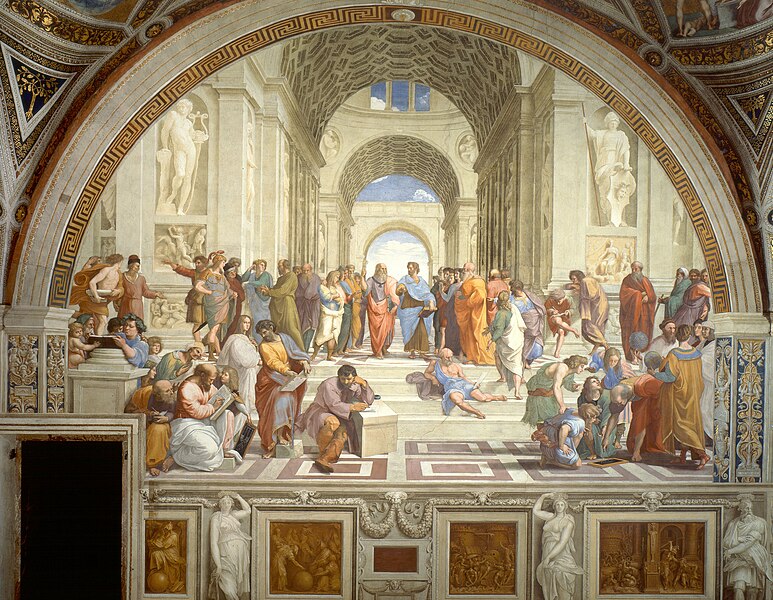
Title: The School of Athens
Author: Raffaello Sanzio da Urbino
Year: 1511
Art Movement: Renaissance
Technique: Fresco
Current Location: Vatican City
The School of Athens represents all the greatest mathematicians, philosophers and scientists from classical antiquity gathered together sharing their ideas and learning from each other. These figures all lived at different times, but here they are gathered together under one roof.

Title: The Death of Hyacinthus
Author: Giovanni Battista Tiepolo
Date: c.1752 – c.1753
Style: Rococo
Genre: mythological painting
Media: oil, canvas
Tag: Greek and Roman Mythology
Location: Thyssen-Bornemisza Museum, Madrid, Spain
Dimensions: 232 x 287 cm
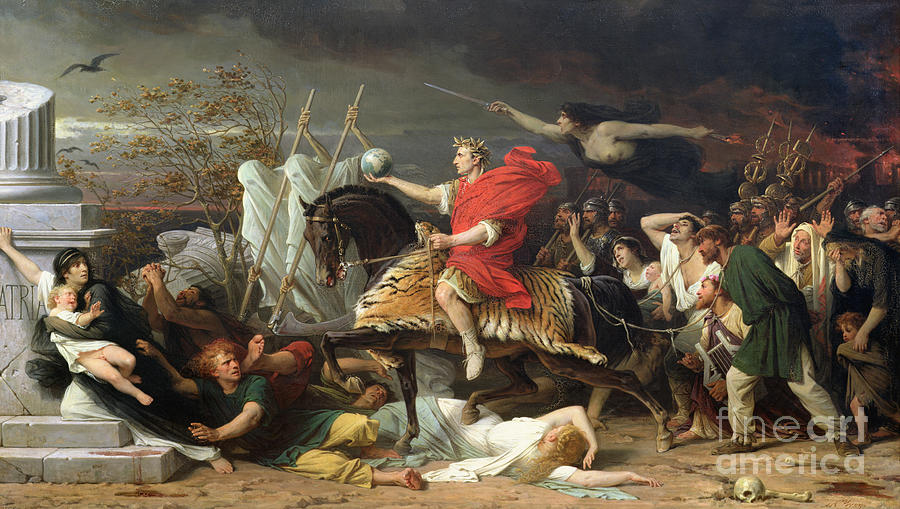
Title: Caesar
Author: Adolphe Yvon
Year: 1875
Biography
Julius Caesar stands out in history as one of most influential men who ever lived. The reason for this is that he is credited for laying the groundwork of the Roman Empire, which thrived for over four hundred years after his death. At the time he lived, the republic of Rome was torn apart by political and civil strife. The tasks of administering government in many far flung provinces, building suitable infrastructure, and regulating a professional army were overwhelming to a political system run by feuding oligarchs in a single city. Julius Caesar understood the drastic reforms that would be necessary to prevent the empire from breaking apart and he made great strides during his own life in this direction, although he destroyed the republic in the process.
In his youth, Julius Caesar was popular and known to be personally courageous, but he also had a reputation as a reveler and a spendthrift, and did not show early signs of serious ambition. He did not rise to high prominence in the popular party until his late thirties, and held only minor offices until then. He was forty by the time he formed the first triumvirate with Crassus and Pompey, and at the time was the junior member. It was in the following decade, from 58 to 50 B.C., that he distinguished himself as a formidable leader in both the military and political domains. In his conquest of Gaul he is said to have taken up arms against over a million Gallic warriors, and killed another million. He completely subdued the entire region of modern France and made forays into Britain and Germany. At the same time he was achieving extraordinary military success, he wrote one of the greatest classic works of literature in the ancient world, “Caesar’s Commentaries on the Gallic War.” His personal and political popularity reached ever greater heights during this time, including everyone but the Senate and their supporters.
After Caesar had served eight years in Gaul the fearful Senate requested that he disband his armies. At that point he made the difficult decision to march to Rome. This essentially forced a civil war, but Caesar hoped to reconcile with his opponents rather than destroy them. All of Italy surrendered to him without a battle and his enemies, led by Pompey, were forced to flee to the East to raise armies there. At the battle of Pharsalia, only one year after he crossed the Rubicon, his most important enemy, Pompey, was defeated. It took another year to consolidate his power and put down minor revolts throughout the empire. At all times Caesar was as conciliatory as possible and pardoned his opponents without hesitation.
By 46 BC the empire was completely pacified and he returned to Rome to start his work of reform and reorganization. He had advanced ideas on many topics, from the building of roads, communication and infrastructure, to a revamped system of taxes, to a change in the very idea of Roman citizenship and voting rights. His career was cut short by assassination, but many of his ideas and reforms were carried through by later emperors. He was at the time, and still is, a very controversial character. His admirers have always seen a great defender of the people against a corrupt oligarchy, while his detractors have seen a power hungry demagogue, and an enemy of democracy. How the world might have been different if he had never lived, or perchance, if he had lived longer, is one of those perennially fascinating questions that historians have been speculating on for twenty centuries.
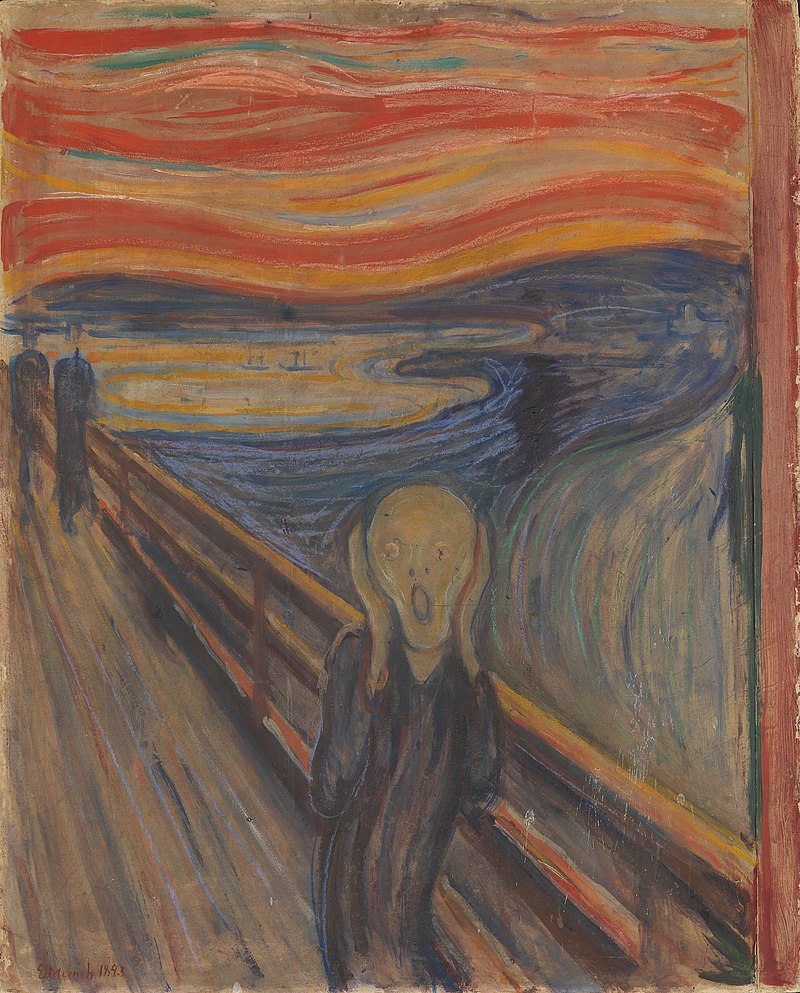
Title: The Scream
Author: Edvard Munch
Year: 1893
Type: Oil, tempera, pastel and crayon on cardboard
In his diary in an entry headed “Nice 22 January 1892”, Munch wrote:
I was walking along the road with two friends – the sun was setting – suddenly the sky turned blood red – I paused, feeling exhausted, and leaned on the fence – there was blood and tongues of fire above the blue-black fjord and the city – my friends walked on, and I stood there trembling with anxiety – and I sensed an infinite scream passing through nature.
He later described his inspiration for the image:
One evening I was walking along a path, the city was on one side and the fjord below. I felt tired and ill. I stopped and looked out over the fjord—the sun was setting, and the clouds turning blood red. I sensed a scream passing through nature; it seemed to me that I heard the scream. I painted this picture, painted the clouds as actual blood. The color shrieked. This became The Scream.
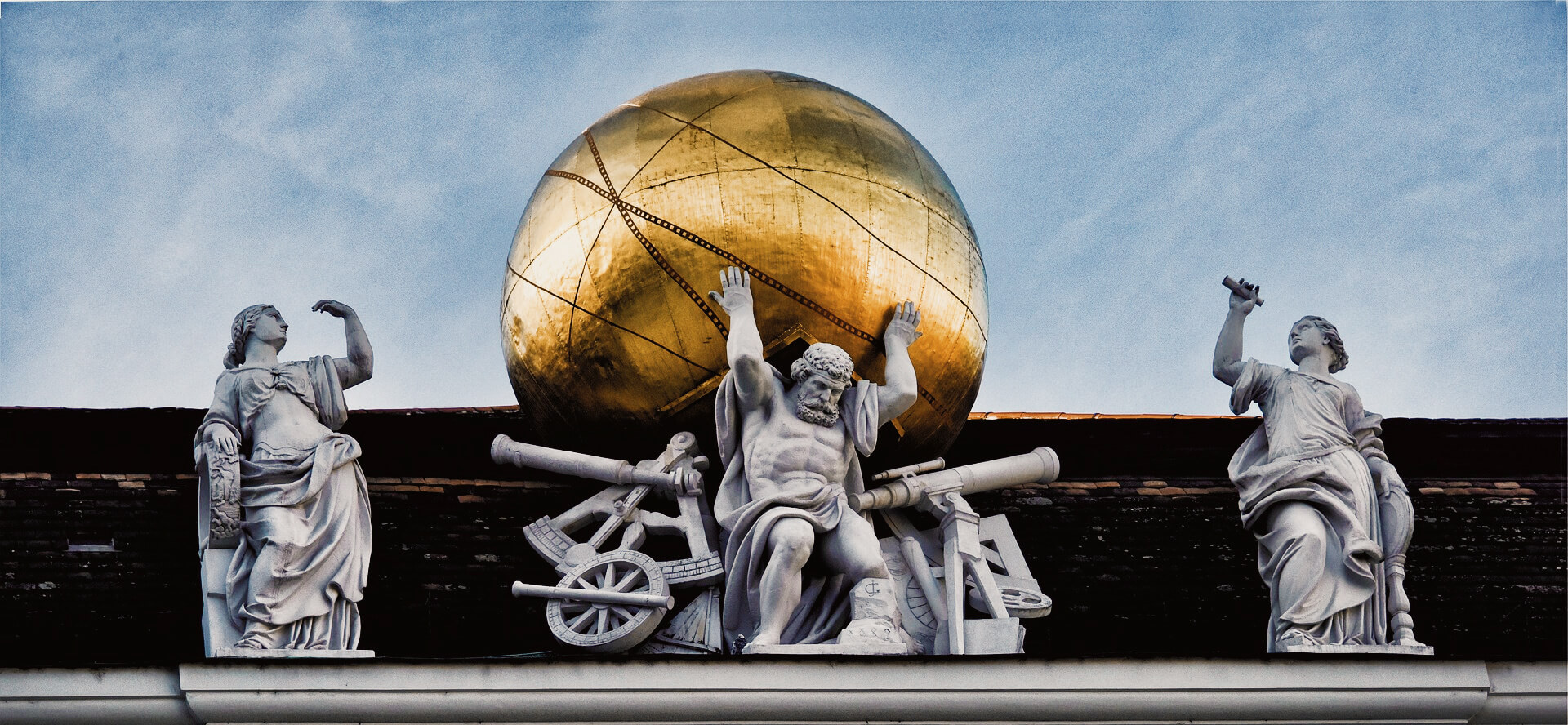
( Atlas holding a celestial sphere over the eastern entrance to the Austrian national library. In the past it was a roof element on the Hofburg Palace at Josefsplatz in 1010 Vienna )
ATLAS was the Titan god who bore the sky aloft. He personified the quality of endurance (atlaô).
Atlas was a leader of the Titanes (Titans) in their war against Zeus and after their defeat he was condemned to carry the heavens upon his shoulders. According to others he was instead appointed guardian of the pillars which held the earth and sky asunder. Atlas was also the god who instructed mankind in the art of astronomy, a tool which was used by sailors in navigation and farmers in measuring the seasons. These roles were often combined and Atlas becomes the god who turns the heaven on their axis, causing the stars to revolve.

Title: The Intervention of the Sabine Women
Author: Jacques Louis David
Period: Neoclassicism
Year: 1799
Medium: Oil on Canvas
Location: Louvre
The scene that David is capturing is the retaliation of the Sabine’s to the Romans. The Romans initially had come to the Sabines and had taken their women, as depicted by many artists in the work “Rape of the Sabine Women”, and now the Sabines were now coming to the Romans to attack them. The leader of the Romans (Romulus), had taken Hersilia, the daughter of Tatius, the leader of the Sabines, and had borne two children to Romulus. In the painting we see Hersilia stopping the attack between the two forces, as well as other women and children. The point that is prominent in the painting is Hersilla standing between Tatius and Romulus just before they are going to fight. Romulus is on the right with his shield, and his arm is in full climax of energy, just about to release his javelin. We also see Tatius as he is holding his shield, waiting to spur off any attacks from Romulus.
 European Culture