

Title: Venus and Mars
Author: Sandro Botticelli
Year: 1483
Genre: mythological painting
Media: panel, tempera
Location: National Gallery, London, UK

Title: Venus and Mars
Author: Sandro Botticelli
Year: 1483
Genre: mythological painting
Media: panel, tempera
Location: National Gallery, London, UK

Title: The Fall of the Rebel Angels
Author: Luca Giordano
Year: 1666
Medium: Oil on canvas
Location: Kunsthistorisches Museum

Title: Perseus with the Head of Medusa
Artist: Benvenuto Cellini
Year: 1545
Period: Mannerism
Location: Florence

Title: The Fall of Phaeton
Author: Peter Paul Rubens
Year: 1604
Period: Baroque
Medium: Oil on canvas
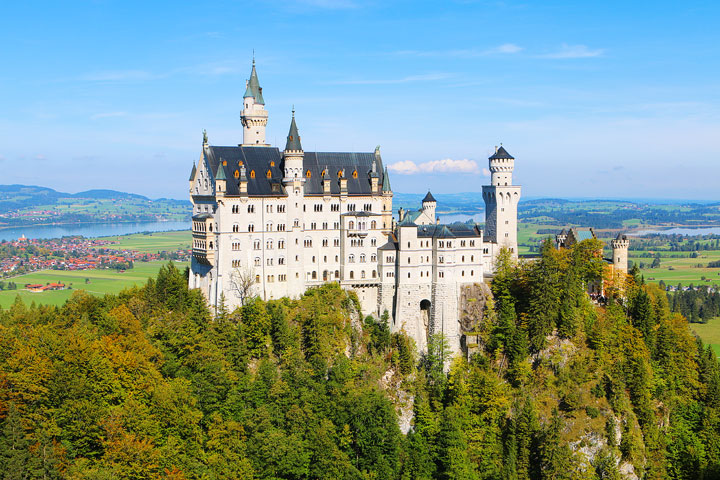
Neuschwanstein Castle turns 150. On September 5, 1869, Bavaria’s fairytale king Ludwig II had the cornerstone laid for the most expensive building project of his time: Neuschwanstein Castle.
Name: Neuschwanstein Castle
Location: Hohenschwangau, Germany
Built year: 1886
Construction Started: 5 September 1869
Architectural Style: Romanesque Revival
Without a doubt, Neuschwanstein Castle represents one of the most popular and most visited castles in the Germany. It was built in the German region of Bavaria, near the town Fussen by the commission of the King Ludwig II of Bavaria, who was known by his nickname “Fairytale King”. He has built this castle to be his residence, and to support the lifetime of work of the German composer Richard Wagner who promoted romanticized view on the medieval renaissance fashion.
Construction of Neuschwanstein Castle lasted for 25 years, and during that period King Ludwig II died and he was not able to see it finished. Construction started in 1868 by clearing the rocky perch on which castle would be built. With the finished road to the construction site, work on the foundation building started in 1869, and central throne room in 1872. After that Gateway building was finished and prepared for occupation (1873), topping of Palas was performed in 1880, interior decoration finished in 1884, castle was opened to the public in 1886 (less than 2 months after the death of King Ludwig II) and finally, castle was finished in 1892 with the completion of the Bower and Square tower.
Neuschwanstein Castle was one of the most expensive castles ever made in Europe, with the construction cost reaching 7 million marks. Its incredible luxury and complicated construction technique imediatley captured the attention of the public, and tourists from all around the world came visiting. This popularity naturally led to the apperiance of the castle in many movies and other art mediums, and the castle itself served as one of the most popular inspirations of “medieval fantasy castle”. This can most notably be seen in the Disneyland’s Sleeping Beauty’s Castle, which was conceived with the Neuschwanstein Castle as its inspiration.
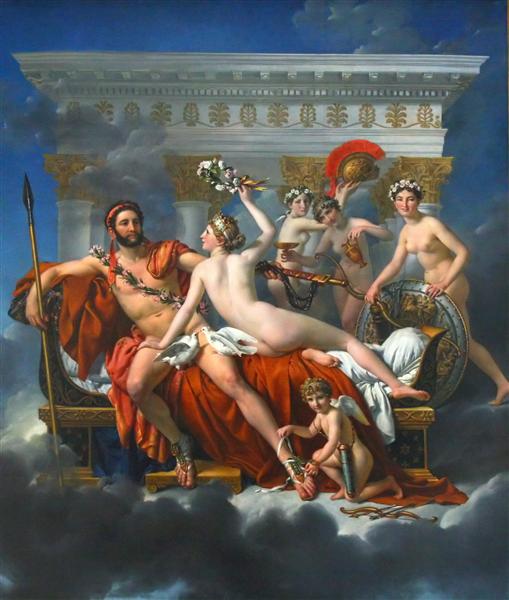
Title: Mars Disarmed by Venus and the Three Graces
Author: Jacques-Louis David
Year: 1824
Style: Neoclassicism
Genre: mythological painting
Media: oil, canvas
Location: Royal Museums of Fine Arts of Belgium, Brussels, Belgium
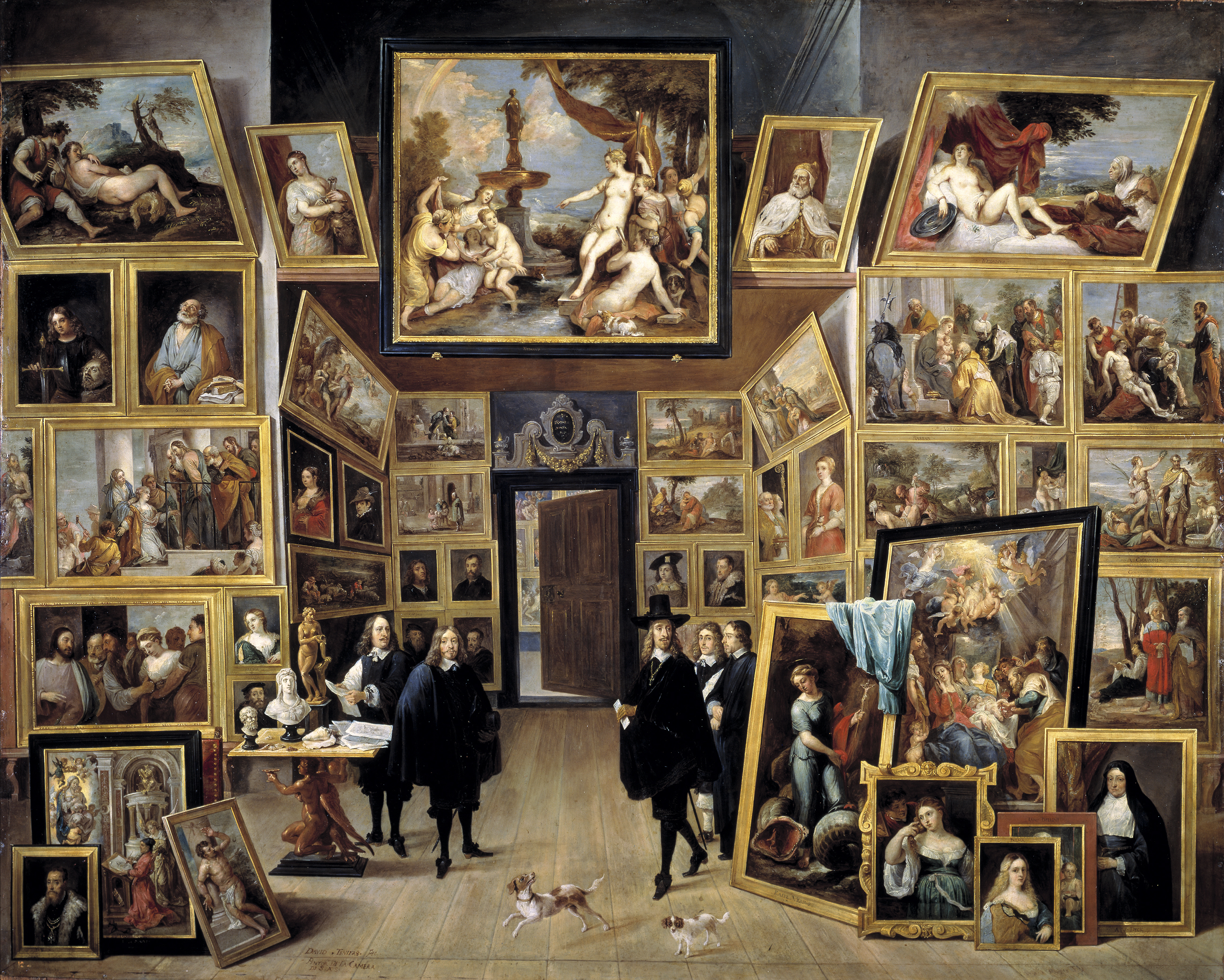
Title: The Archduke Leopold Wilhelm in his Painting Gallery in Brussels
Author: David Teniers the Younger
Year: 1651
Medium: oil on copper
Location: Prado Museum, Madrid
Title: Mona Lisa
Author: Leonardo da Vinci
Year: 1503
Subject: Lisa Gherardini
Location: Louvre Museum
The “Gioconda” or Mona Lisa is quite possibly the most well-known piece of painted artwork in the entire world. It was painted by the Leonardo Da Vinci, the famous Italian artist, between 1503 and 1519, and is a half body commission for a woman named Lisa Gherardini. Her husband, Francesco Del Giocondo requested the work by Da Vinci just after the turn of the century. It is perhaps the most studied piece of artwork ever known. The subject’s facial expression has brought about a source of debate for centuries, as her face remains largely enigmatic in the portrait. Originally commissioned in Italy, it is now at home in the French Republic, and hangs on display in the Louvre in Paris.

SOCRATES BIOGRAPHY
470-399 B.C.
“I know nothing except the fact of my ignorance.” – Socrates
Socrates was a Greek philosopher and teacher and one of the most original, influential and CONTROVERSIAL people in ancient Greek philosophy and Western ideas.
Socrates would LISTEN, ASK QUESTIONS, CRITICIZE and CHALLENGE ANSWERS. He asked probing questions that would untimately lead to the truth. This became known as the “SOCRATIC METHOD.”
Socrates was born in Athens, Greece in about 470 B.C. Socrates studied sculpture, but soon quit to “SEEK TRUTH” in his own way. He sought to uncover the nature of virtue and to find a rule of life. Socrates did not write any books or papers. His life is preserved in “Memorabilia” of the historian Xenophon and in Plato’s “Socratic Dialogues.”
Socrates began questioning Athenians thinking and their democratic system, which caused hostility to rise. He was a master at exposing FRAUDS and LIARS, which made him numerous enemies. He taught the young to reject the morals accepted by Athenian society, due to their weak reasoning behind people’s moral beliefs.
The Socratic Method consisted of asking questions like “What is life?” of people who were confident in their answers, and then little by little EXPOSING THEIR HYPOCRISIES, IGNORANCES and CONTRADICTIONS. Socrates was famous for saying HE KNOWS NOTHING, except for the fact that HE KNOWS NOTHING.
At the age of 70, Socrates was brought to trial and charged with: “not believing in the gods the state believes in, and introducing different new divine powers; and also for corrupting the young.” Socrates was convicted by the COUNCIL of 500 and was offered an alternative to death by paying a fine, but refused it. SOCRATES was therefore sentenced to DEATH BY DRINKING HEMLOCK.
Socrates most famous philosophy was the necessity to DO WHAT ONE THINKS IS RIGHT EVEN WHEN ONE IS AGAINST UNIVERSAL OPPOSITION .
 European Culture