
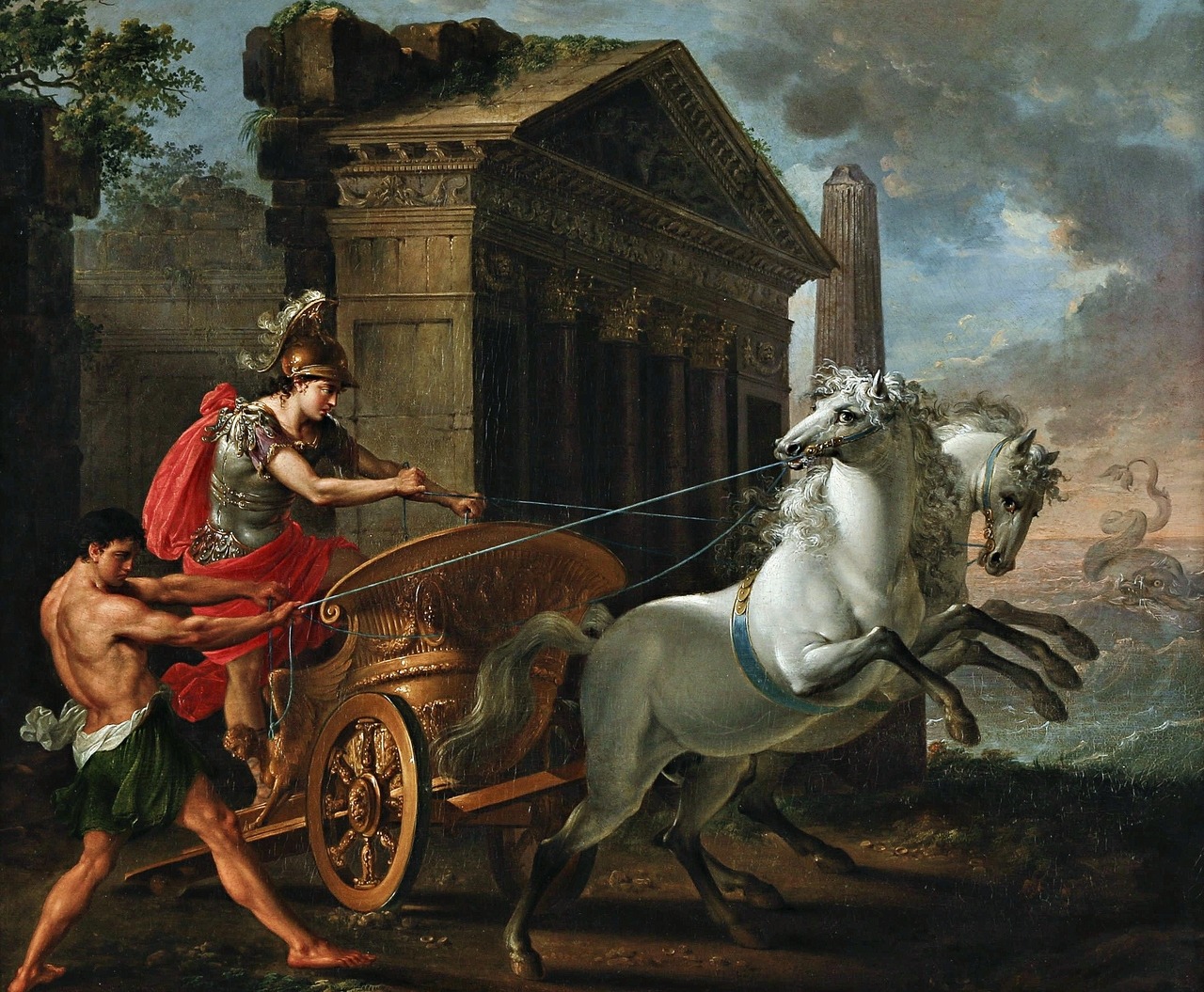
Hercules and the Horses of Diomedes. 1801. Joseph Dorffmeister. Hungarian (1764-1814) oil/canvas.

Hercules and the Horses of Diomedes. 1801. Joseph Dorffmeister. Hungarian (1764-1814) oil/canvas.
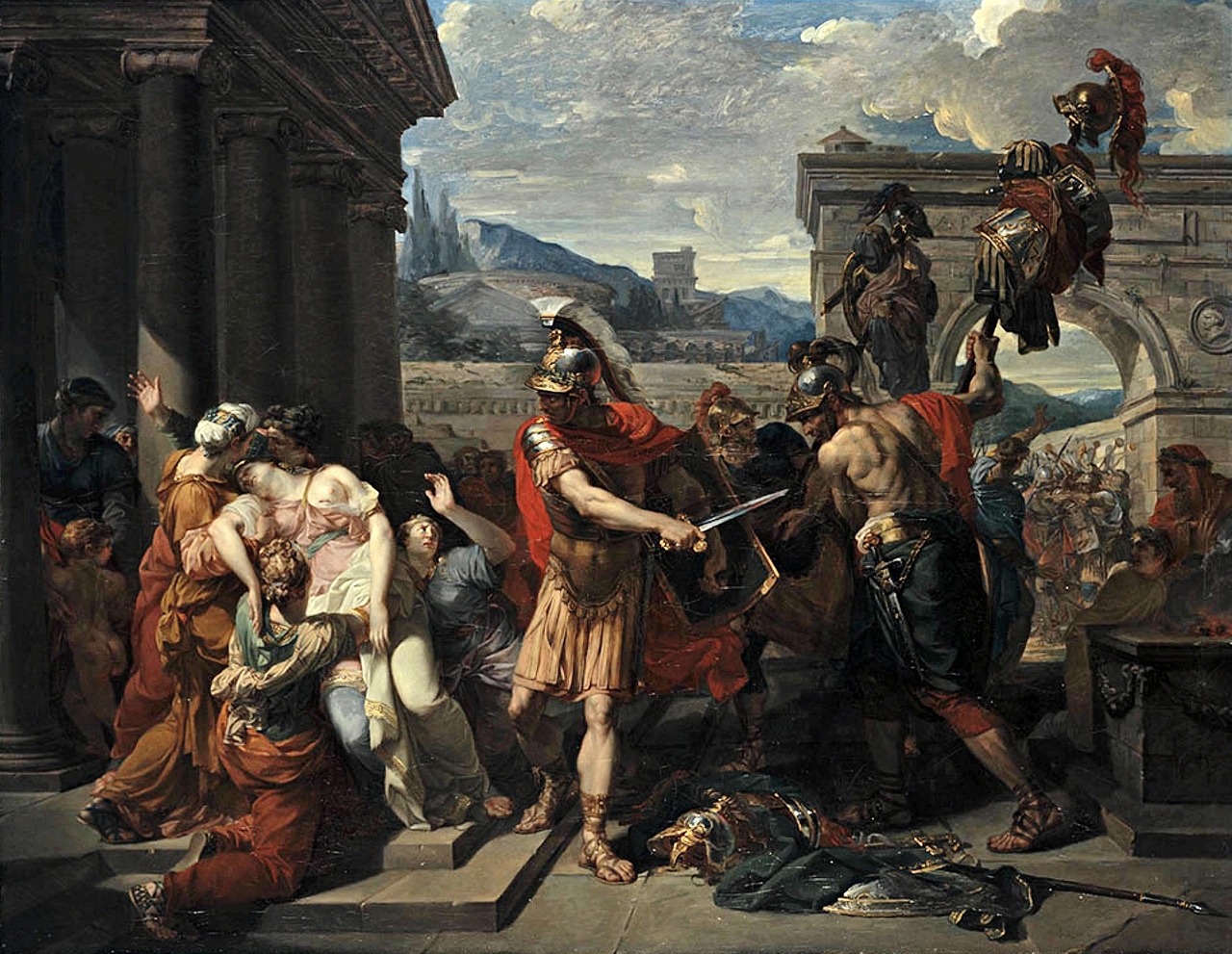
Horace Kills his Sister Camille. 1785. Frederic Jean Baptiste Desmarais. French 1756-1813. winner Prix de Rome 1785. oil/canvas.
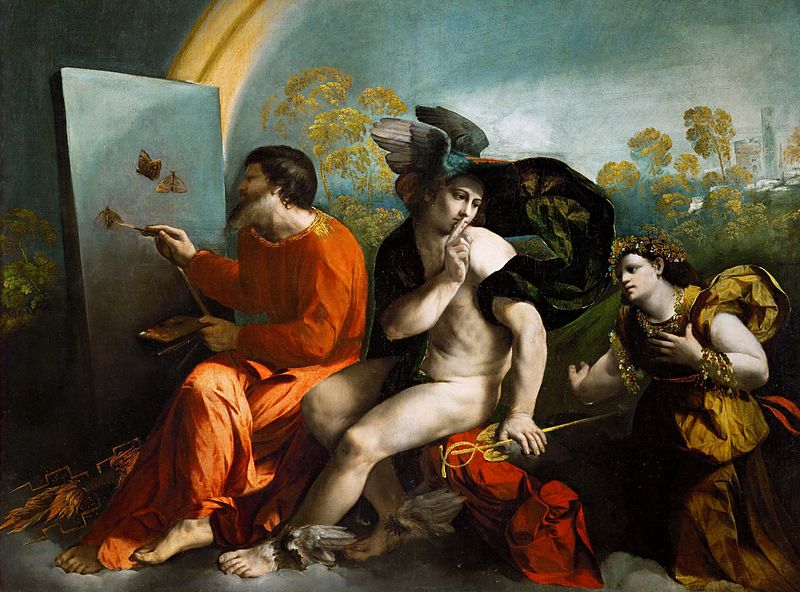
”Jupiter, Mercury and Virtue” painting by Dosso Dossi
Year: 1523 / Genre: mythological painting / Location: Wawel Castle

”Archangel Michael conquering the Devil”
Location: Hamburg Germany St. Michaelis Church
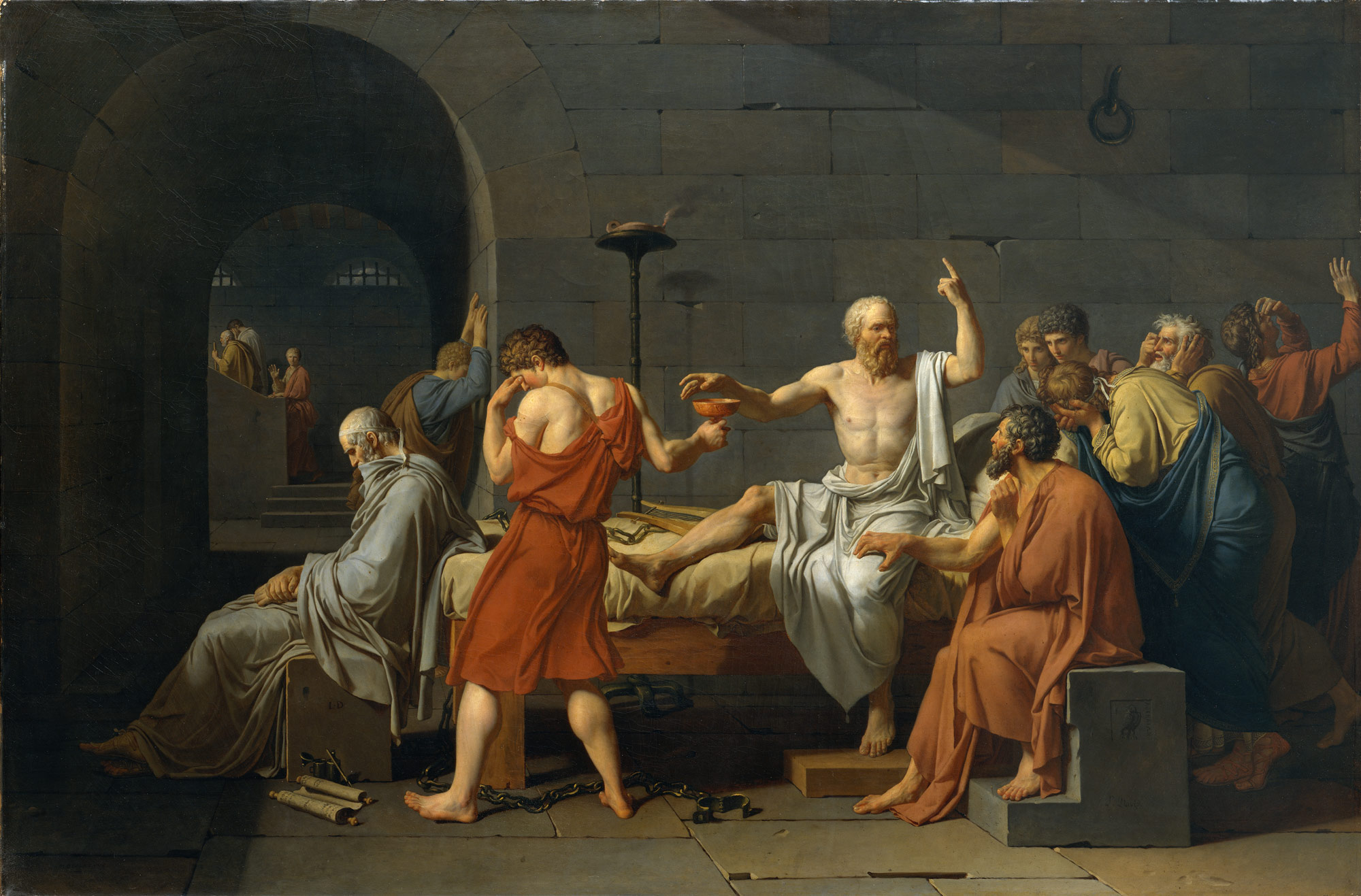
Artist: Jacques Louis David
Date: 1787
Medium: Oil on canvas
Dimensions: 51 x 77 1/4 in. (129.5 x 196.2 cm)
The Athenian courts executed the Greek philosopher Socrates (469–399 B.C.) for the crime of impiety: his behavior toward the gods was judged to have been irreverent, and he had exerted a corrupting influence on his young male followers. Socrates declined to renounce his beliefs and died willingly, discoursing on the immortality of the soul before drinking from the cup of poisonous hemlock. In a prison of unrelieved severity, David depicted a frieze of carefully articulated figures in antique costume acting out in the language of gesture the last moments of the moral philosopher’s life. Because, shortly before the onset of the French revolution, the painting gave expression to the principle of resisting unjust authority, it is among David’s most important works. The canvas is also his most perfect statement of the Neoclassical style.
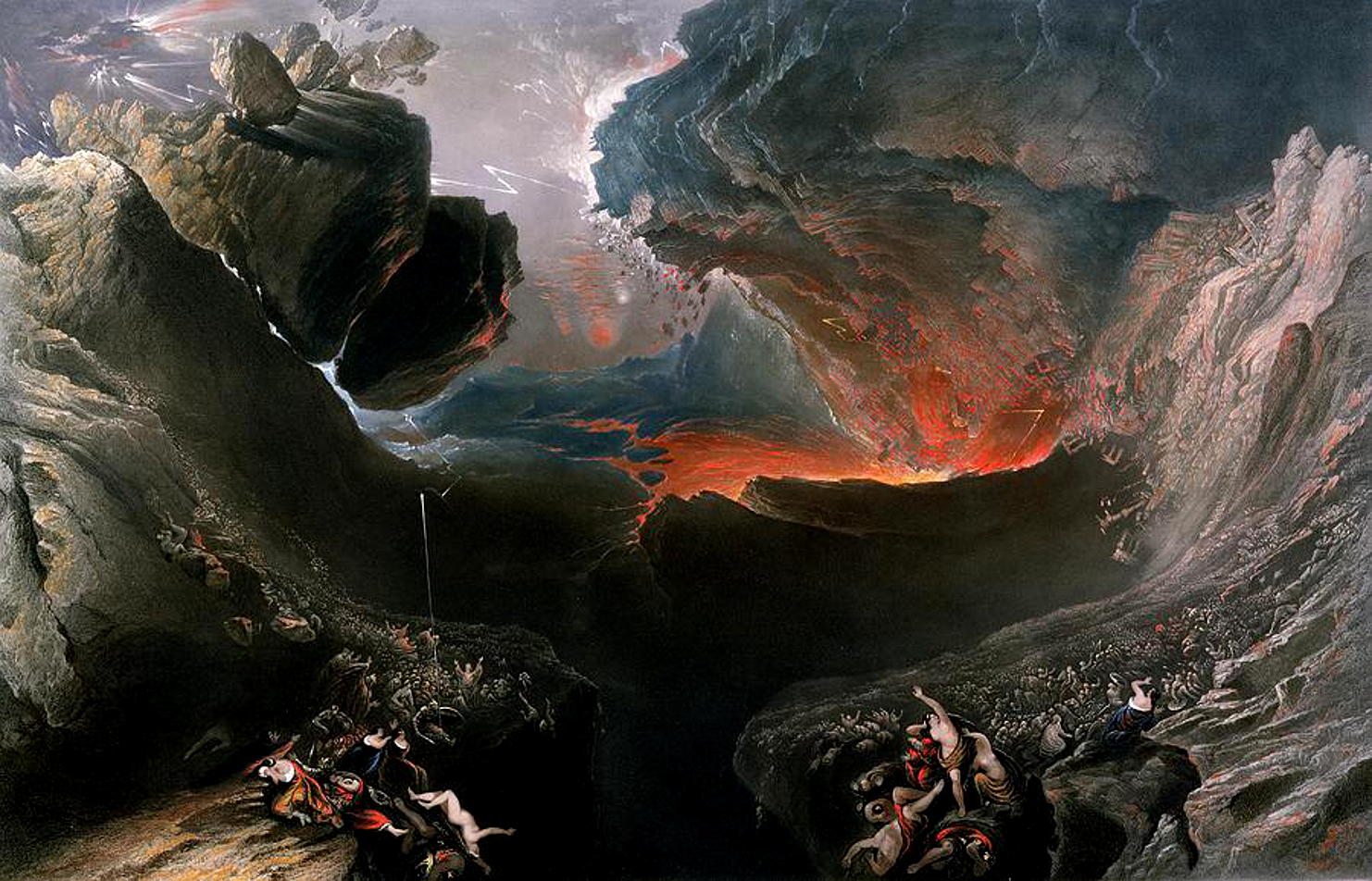
Johnn Martin: ” The Great Day of His Wrath”
Series title: The Last Judgment
Date: circa 1853
Medium oil on canvas
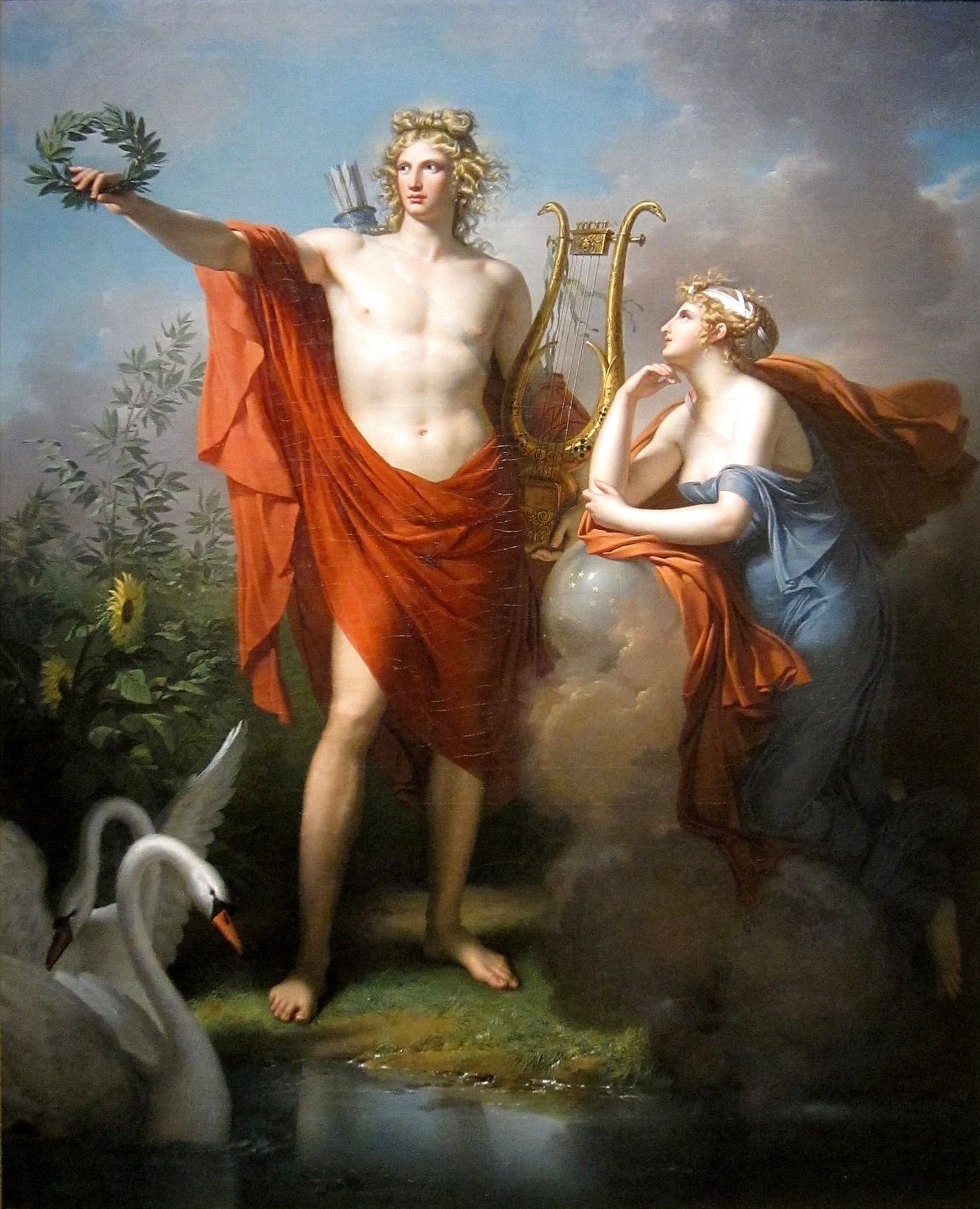
Charles Meynier – Apollo, God of Light, Eloquence, Poetry and the Fine Arts with Urania, Muse of Astronomy (1789-1800)

“Thor’s Fight with the Giants” by Mårten Eskil Winge depicts the Norse god Thor in a battle against the evil spirits called Jötnar. The thunder god is shown riding his chariot pulled by Thor’s loyal goats. He is wearing his belt of power and swinging his hammer of thunder. Thor is depicted as strong, blond, brave and fearless. The original audience of the 1870s interpreted the painting as a depiction of good battling evil.
In Germanic mythology, Thor is the hammer-wielding god associated with thunder, lightning, oak trees, the protection of humankind and fertility. This painting was created in 1872 and became popular among contemporary nationalists.
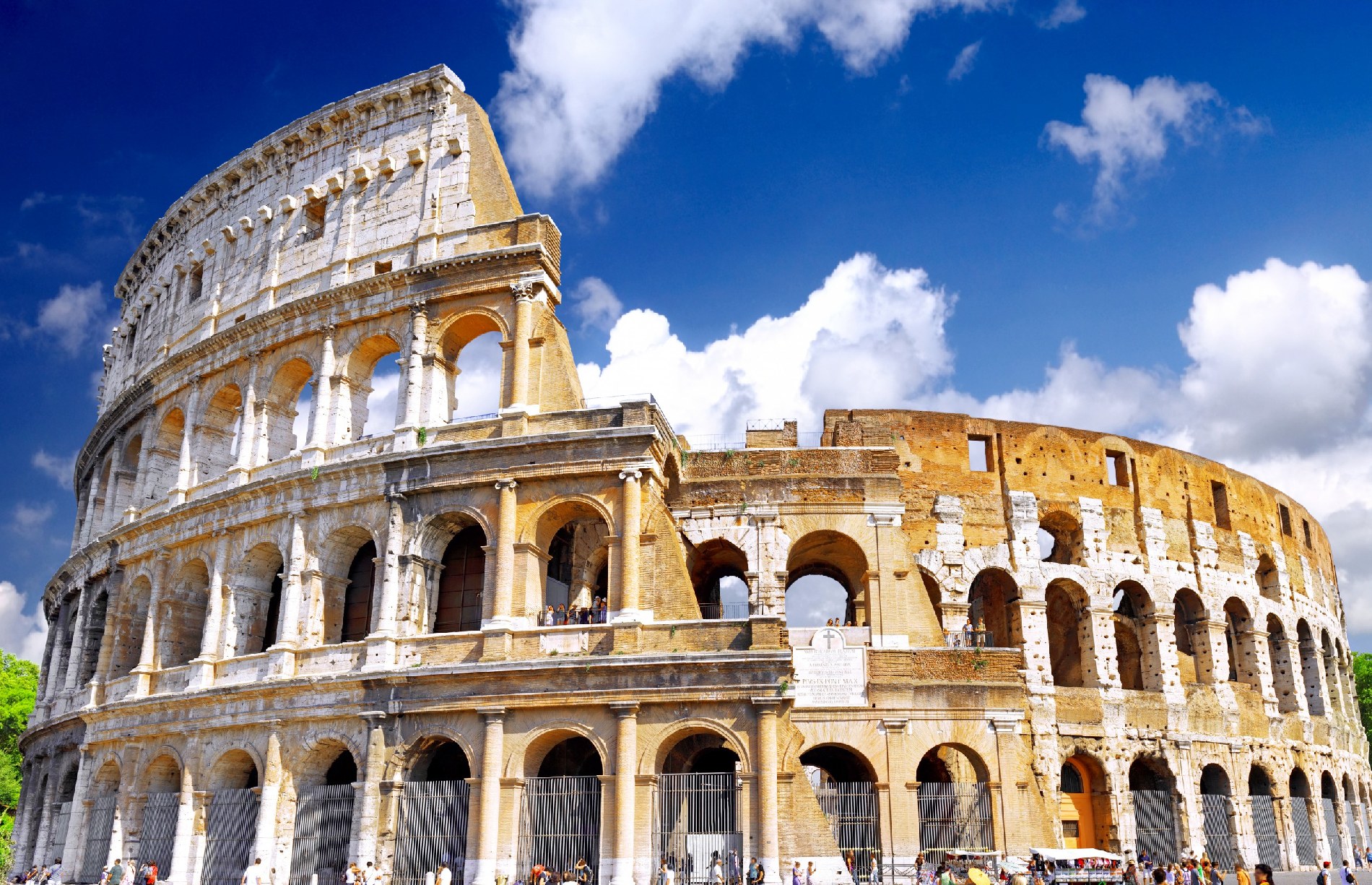
Located just east of the Roman Forum, the massive stone amphitheater known as the Colosseum was commissioned around A.D. 70-72 by Emperor Vespasian of the Flavian dynasty as a gift to the Roman people. In A.D. 80, Vespasian’s son Titus opened the Colosseum–officially known as the Flavian Amphitheater–with 100 days of games, including gladiatorial combats and wild animal fights. After four centuries of active use, the magnificent arena fell into neglect, and up until the 18th century it was used as a source of building materials. Though two-thirds of the original Colosseum has been destroyed over time, the amphitheater remains a popular tourist destination, as well as an iconic symbol of Rome and its long, tumultuous history.
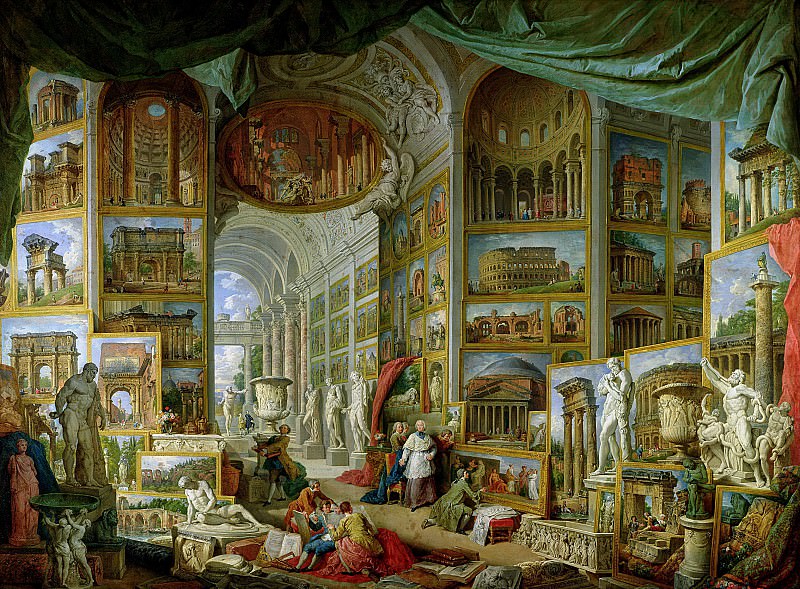
 European Culture