

Title: Venus in the Forge of Vulcan
Year: 1611
Author: Jan Brueghel (I) and Hendrick van Balen (I)
Medium: oil on panel
Location: Galleria Doria Pamphilj – Rome, Italy

Title: Venus in the Forge of Vulcan
Year: 1611
Author: Jan Brueghel (I) and Hendrick van Balen (I)
Medium: oil on panel
Location: Galleria Doria Pamphilj – Rome, Italy
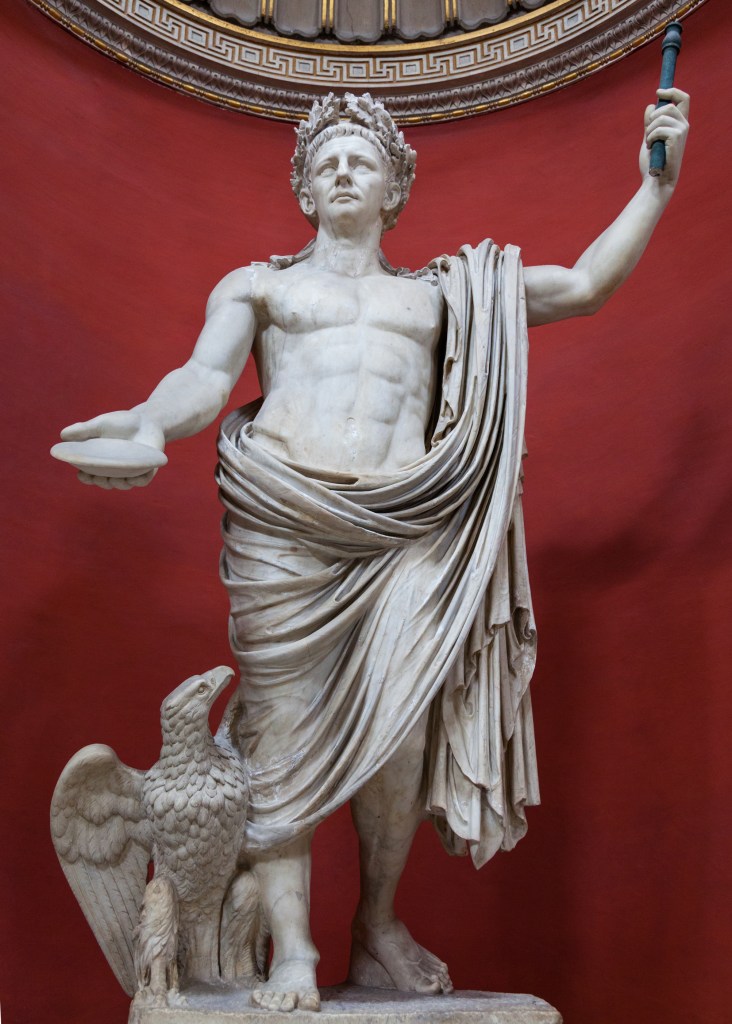
”Statue of Claudius as Jupiter”
This marble statue of Claudius portrays him as the embodiment of Jupiter with the sceptre, a sign of Jupiter’s absolute rule. He also has the eagle by his side which also accompanied Jupiter, but instead of holding a lighting bolt he holds a libation dish offering a libation for his country. 1st century A.D. Vatican Museums, Rome

Title: Romulus and Remus
Author: Peter Paul Rubens
Year: 1615
Genre: mythological painting
Medium: oil on canvas
Location: Capitoline Museums – Rome , Italy
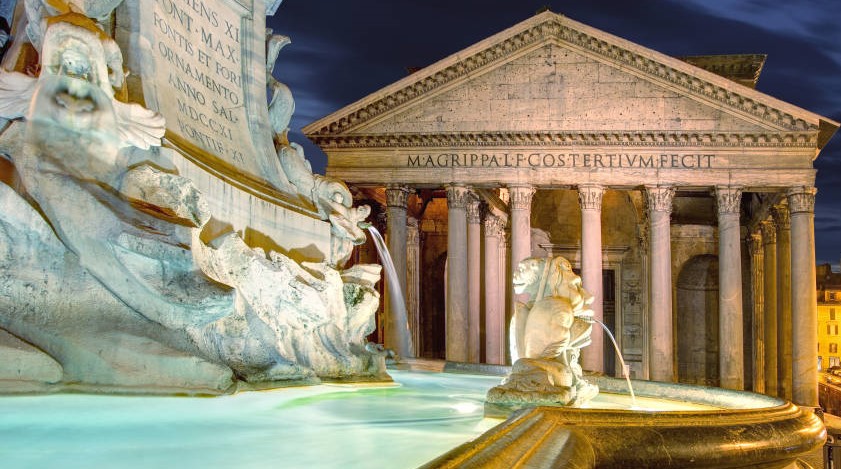
The Pantheon was built as a Roman temple and completed by the emperor Hadrian around 126 A.D. The name “Pantheon” comes from the Greek, meaning “honor all Gods” and this exactly was its purpose. As with most of the ancient monuments in Rome also the Pantheon has more than one story to tell. Most historians believe that Emperor Augustus’ right hand, Agrippa, built the first Pantheon in 27 BC, but the building burned down in the great fire of 80 AD and was rebuilt by Emperor Domitian. But again the temple was struck by lightning and burned down once more in 110 AD. The Pantheon as we know it today was finally built in 120 AD by Emperor Hadrian. In 609 A.D the Pantheon was transformed into a church which might be the reason that it was saved from being destroyed during the Middle Ages. And yes, there are Sunday Masses for everyone to join until today. Truly fascinating are the 16 massive Corinthian columns (12m/39 ft tall) at the entry and the giant dome with its hole in the top, also called “The eye of the Pantheon”, the largest unreinforced concrete dome in the world and considered a great architectural achievement. The first king of unified Italy, Vittorio Emmanuelle II is buried in the Pantheon and so is his son, King Umberto I as well as the famous Renaissance painter Raphael.
[SOURCE:www.wostphoto.com/rome-pantheon]
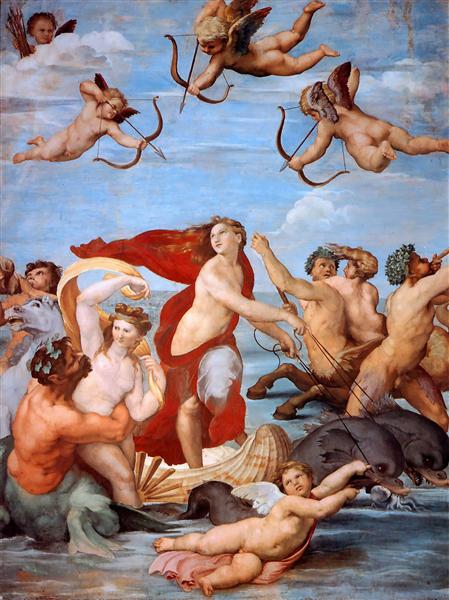
Title: The Triumph of Galatea
Author: Raffaello Sanzio da Urbino
Year: 1512
Style: High Renaissance
Genre: mythological painting
Location: Villa Farnesina, Rome, Italy
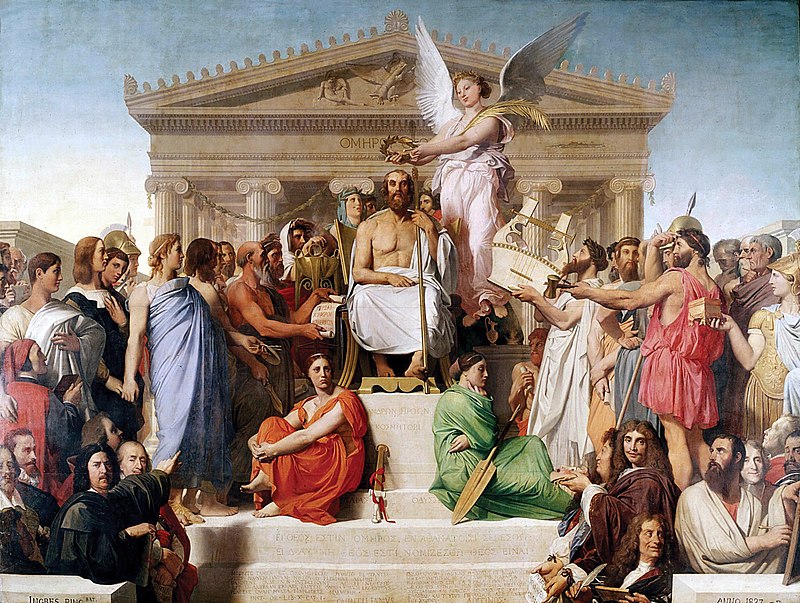
Title: The Apotheosis of Homer
Author: Jean Auguste Dominique Ingres
Year: 1827
Genre: mythological painting
Style: Neoclassicism
Media: oil, canvas
Location: Louvre, Paris, France
Ingres created this painting by combining over 100 small drawings for the assorted characters, each one making the drawing more detailed and precise. The painting was a state commission by Charles X to have himself remembered in the building works of the Louvre. The painting depicts an image of Homer, receiving all of the brilliant men of Rome, Greece, and contemporary times. The characters in the painting were extensively researched by Ingres, who studied the paintings of Nicholas Poussin, Raphael, and Apelles, the ancient Greek painter. The painting also includes the figures of Dante, Virgil, and Moliere, the French playwright, along with other figures, including Greek and Roman Gods.
[ SOURCE: Wikiart.org ]
Title: The Consummation of the Empire
Author: Thomas Cole
Year: 1836
Series: The Course of Empire
Style: Romanticism
Media: oil, canvas
 European Culture