
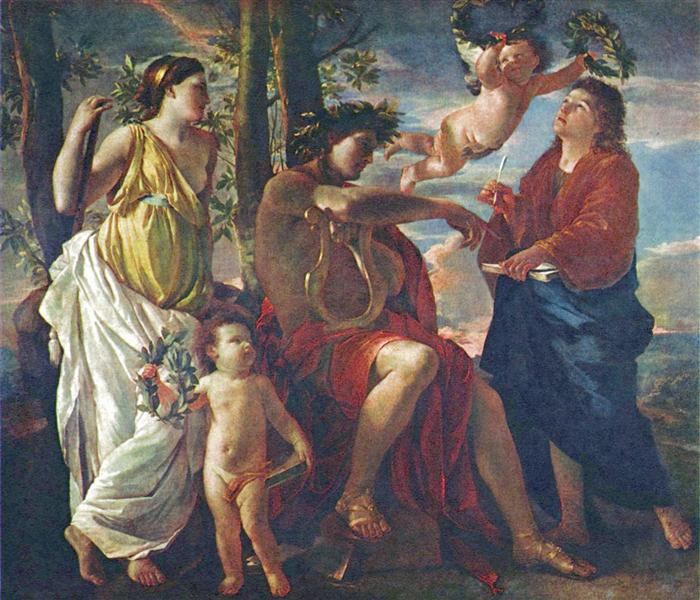
Title: The Poet’s Inspiration
Author: Nicolas Poussin
Year: 1629
Style: Classicism
Genre: mythological painting
Media: oil, canvas
Location: Louvre, Paris, France

Title: The Poet’s Inspiration
Author: Nicolas Poussin
Year: 1629
Style: Classicism
Genre: mythological painting
Media: oil, canvas
Location: Louvre, Paris, France
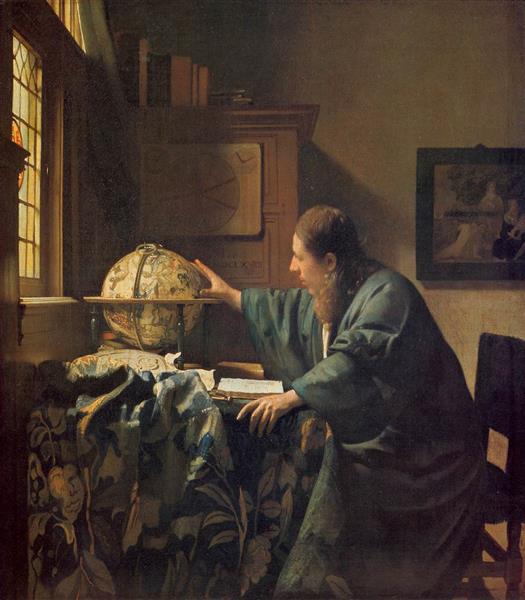
Title: The astronomer
Author: Johannes Vermeer
Year: 1668
Style: Baroque
Media: oil, canvas
Location: Louvre, Paris, France
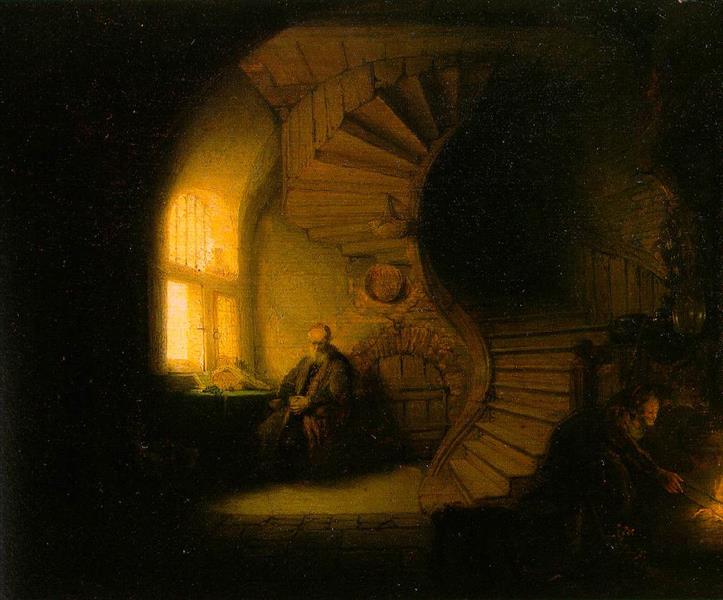
Title: Philosopher in Meditation
Author: Rembrandt
Year: 1632
Style: Baroque
Media: oil , board
Location: Louvre, Paris, France
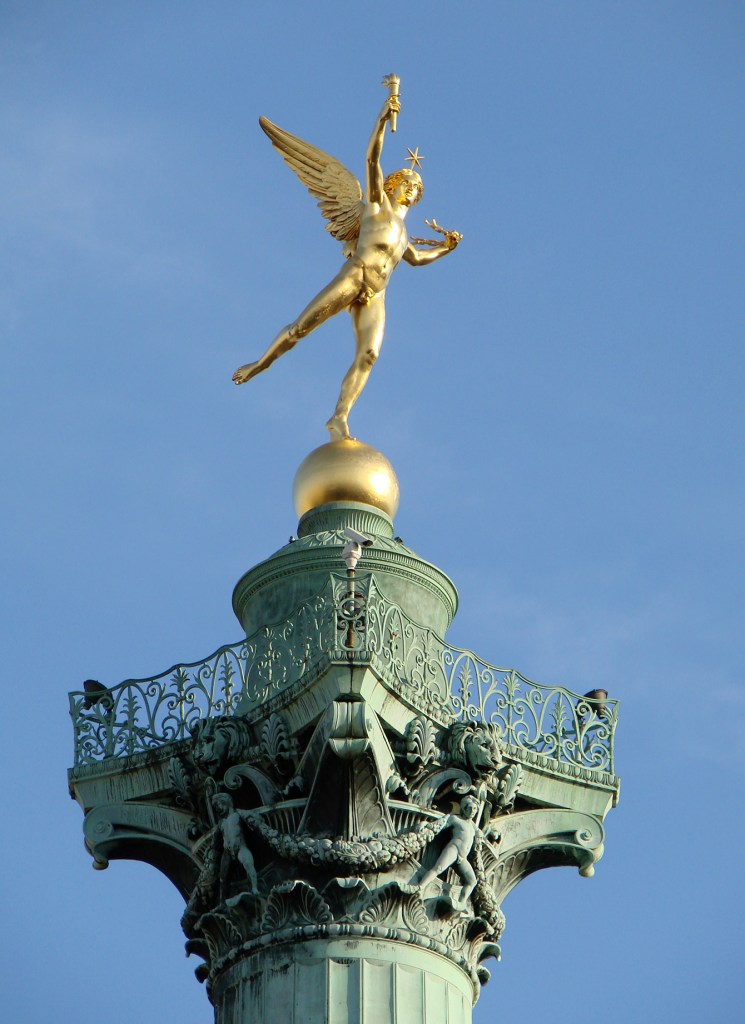
July Column designed by Jean-Antoine Alavoine .
Year: 1840
Location: Place de la Bastille, Paris , France
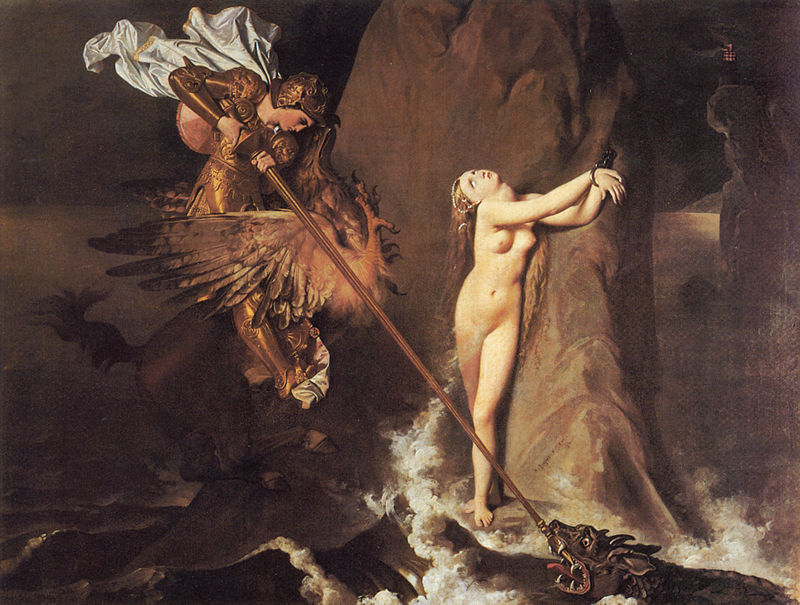
Title: Roger Freeing Angelica
Author: Jean Auguste Dominique Ingres
Year: 1819
Period: Neoclassicism
Medium: Oil paint
Location: Louvre Museum
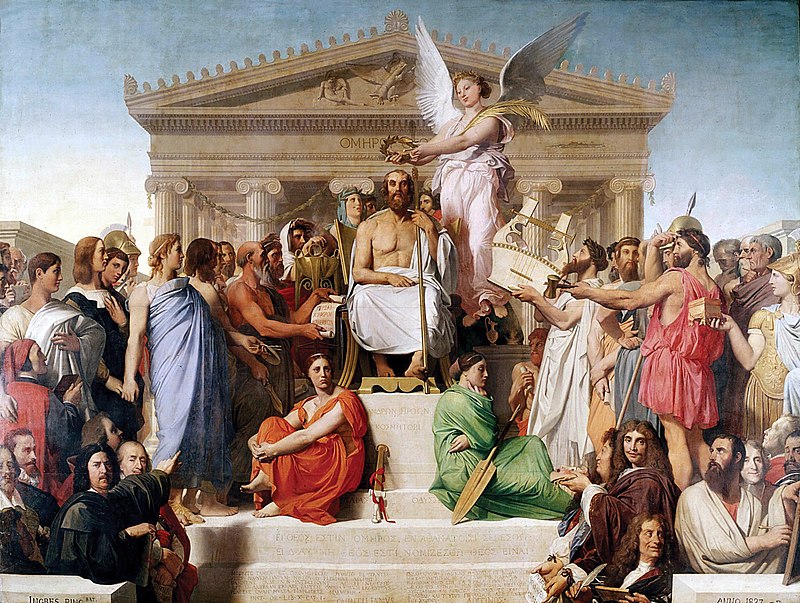
Title: The Apotheosis of Homer
Author: Jean Auguste Dominique Ingres
Year: 1827
Genre: mythological painting
Style: Neoclassicism
Media: oil, canvas
Location: Louvre, Paris, France
Ingres created this painting by combining over 100 small drawings for the assorted characters, each one making the drawing more detailed and precise. The painting was a state commission by Charles X to have himself remembered in the building works of the Louvre. The painting depicts an image of Homer, receiving all of the brilliant men of Rome, Greece, and contemporary times. The characters in the painting were extensively researched by Ingres, who studied the paintings of Nicholas Poussin, Raphael, and Apelles, the ancient Greek painter. The painting also includes the figures of Dante, Virgil, and Moliere, the French playwright, along with other figures, including Greek and Roman Gods.
[ SOURCE: Wikiart.org ]
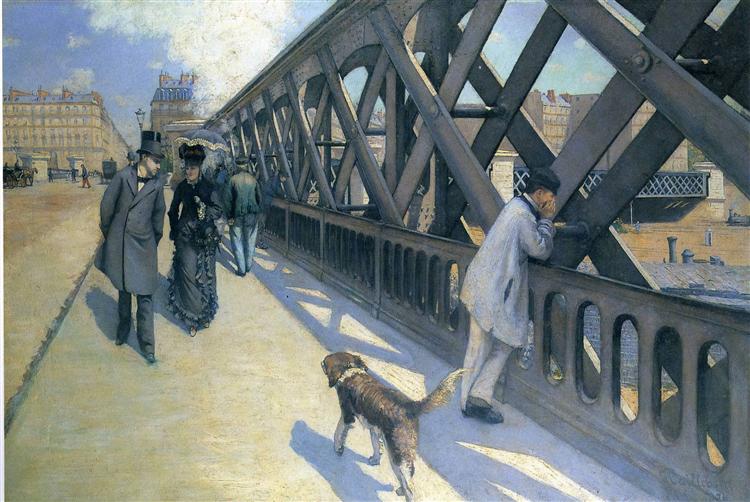
Title: Le Pont de L’Europe
Author: Gustave Caillebotte
Year: 1881
Style: Impressionism
Genre: cityscape
Media: oil, canvas
Location: Private Collection, Petit Palais, Geneva, Switzerland

Self-Portrait by Vincent van Gogh
Year: 1889
Media: oil, canvas
Location: Musée d’Orsay, Paris, France
[ Vincent van Gogh Biography ]
Vincent van Gogh (March 30, 1853 – July 29, 1890) was born on 30 March 1853 in Zundert, a village in the southern province of North Brabant. He was the eldest son of the Reverend Theodorus van Gogh (1822 – 1885) and Anna Cornelia Carbentus (1819 – 1907), whose other children were Vincent’s sisters Elisabeth, Anna, and Wil, and his brother Theo and Cor. Little is known about Vincent’s early years other than that he was a quiet child with no obvious artistic talent. He himself would later look back on his happy childhood with great pleasure.
At age 16 Vincent started to work for the art dealer Goupil & Co. in The Hague. His four years younger brother Theo, with whom Vincent cherished a life long friendship, would join the company later. This friendship is amply documented in a vast amount of letters they sent each other. These letters have been preserved and were published in 1914. They provide a lot of insight into the life of the painter, and show him to be a talented writer with a keen mind. Theo would support Vincent financially throughout his life.
In 1873, his firm transferred him to London, then to Paris. He became increasingly interested in religion; in 1876 Goupil dismissed him for lack of motivation. He became a teaching assistant in Ramsgate near London, then returned to Amsterdam to study theology in 1877.
After dropping out in 1878, he became a layman preacher in Belgium in a poor mining region known as the Borinage. He even preached down in the mines and was extremely concerned with the lot of the workers. He was dismissed after 6 months and continued without pay. During this period he started to produce charcoal sketches.
In 1880, Vincent van Gogh followed the suggestion of his brother Theo and took up painting in earnest. For a brief period Vincent took painting lessons from Anton Mauve at The Hague. Although Vicent and Anton soon split over divergence of artistic views, influences of the Hague School of painting would remain in Vincents work, notably in the way he played with light and in the looseness of his brush strokes. However his usage of colours, favouring dark tones, set him apart from his teacher.
In 1881 he declared his love to his widowed cousin Kee Vos, who rejected him. Later he would move in with the prostitute Sien Hoornik and her children and considered marrying her; his father was strictly against this relationship and even his brother Theo advised against it. They later separated.
Impressed and influenced by Jean-Francois Millet, van Gogh focussed on painting peasants and rural scenes. He moved to the Dutch province Drenthe, later to Nuenen, North Brabant, also in The Netherlands. Here he painted in 1885.
In the winter of 1885-1886 Van Gogh attended the art academy of Antwerp, Belgium. This proved a disappointment as he was dismissed after a few months by his Professor. Van Gogh did however get in touch with Japanese art during this period, which he started to collect eagerly. He admired its bright colors, use of canvas space and the role lines played in the picture. These impressions would influence him strongly. Van Gogh made some painting in Japanese style. Also some of the portraits he painted are set against a background which shows Japanese art.
In spring 1886 Vincent van Gogh went to Paris, where he moved in with his brother Theo; they shared a house on Montmartre. Here he met the painters met Edgar Degas, Camille Pissarro, Bernard, Henri de Toulouse-Lautrec and Paul Gauguin. He discovered impressionism and liked its use of light and color, more than its lack of social engagement (as he saw it). Especially the technique known as pointillism (where many small dots are applied to the canvas that blend into rich colors only in the eye of the beholder, seeing it from a distance) made its mark on Van Goghs own style. It should be noted that Van Gogh is regarded as a post-impressionist, rather than an impressionist.
In 1888, when city life and living with his brothers proved too much, Van Gogh left Paris and went to Arles, Bouches-du-Rh, France. He was impressed with the local landscape and hoped to found an art colony. He decorated a “yellow house” and created a celebrated series of yellow sunflower paintings for this purpose. Only Paul Gauguin, whose simplified colour schemes and forms (known as synthetism) attracted van Gogh, followed his invitation. The admiration was mutual, and Gauguin painted van Gogh painting sunflowers. However their encounter ended in a quarrel. Van Gogh suffered a mental breakdown and cut off part of his left ear, which he gave to a startled prostitute friend. Gauguin left in December 1888.
The only painting he sold during his lifetime, The Red Vineyard, was created in 1888. It is now on display in the Pushkin Museum in Moscow, Russia.
Vincent van Gogh now exchanged painting dots for small stripes. He suffered from depression, and in 1889 on his own request Van Gogh was admitted to the psychiatric center at Monastery Saint-Paul de Mausole in Saint Remy de Provence, Bouches-du-Rh, France. During his stay here the clinic and its garden became his main subject. Pencil strokes changed again, now into spiral curves.
In May 1890 Vincent van Gogh left the clinic and went to the physician Paul Gachet, in Auvers-sur-Oise near Paris, where he was closer to his brother Theo, who had recently married. Gachet had been recommended to him by Pissarro; he had treated several artists before. Here van Gogh created his only etching: a portrait of the melancholic doctor Gachet. His depression aggravated. On July 27 of the same year, at the age of 37, after a fit of painting activity, van Gogh shot himself in the chest. He died two days later, with Theo at his side, who reported his last words as “La tristesse durera toujours” (French: “The sadness will last forever”). He was buried at the cemetery of Auvers-sur-Oise; Theo unable to come to terms with his brother’s death died 6 months later and was buried next to him. It would not take long before his fame grew higher and higher. Large exhibitions were organized soon: Paris 1901, Amsterdam 1905, Cologne 1912, New York 1913 and Berlin 1914.
Vincent van Gogh’s mother threw away quite a number of his paintings during Vincent’s life and even after his death. But she would live long enough to see her son become a world famous painter.
[ Source: https://www.vincent-van-gogh-gallery.org/ ]
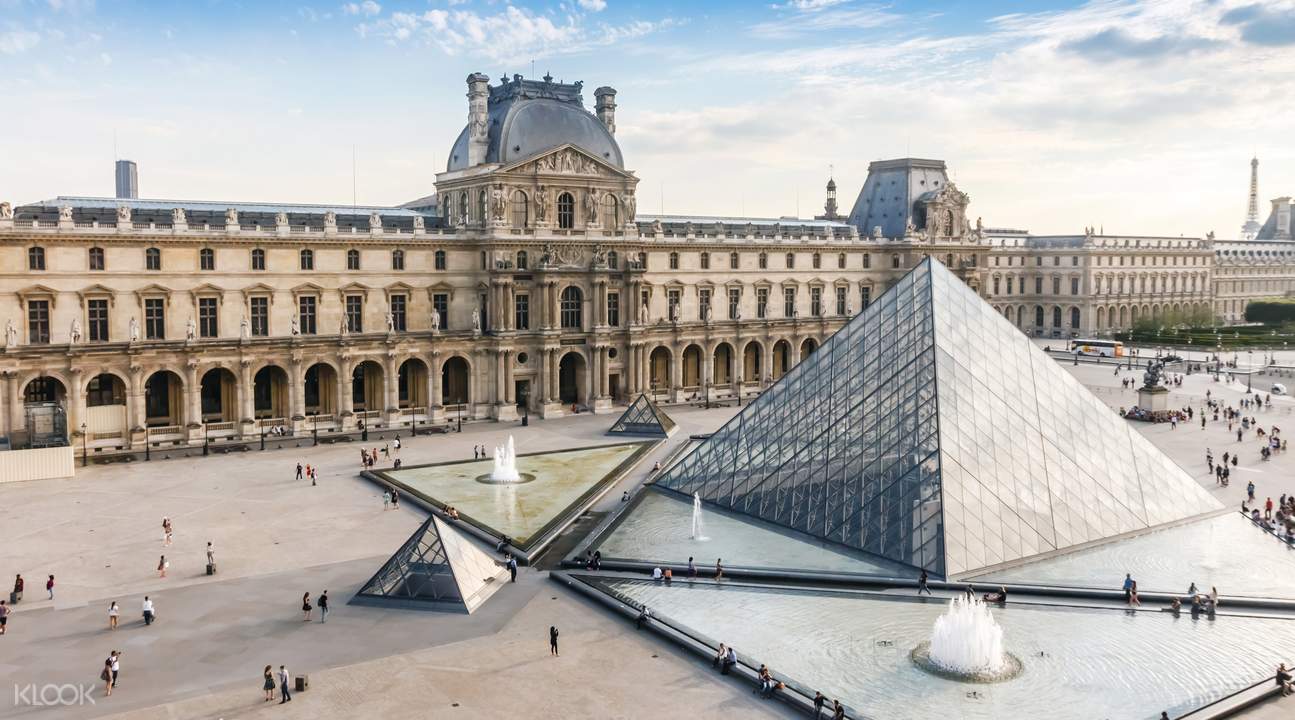
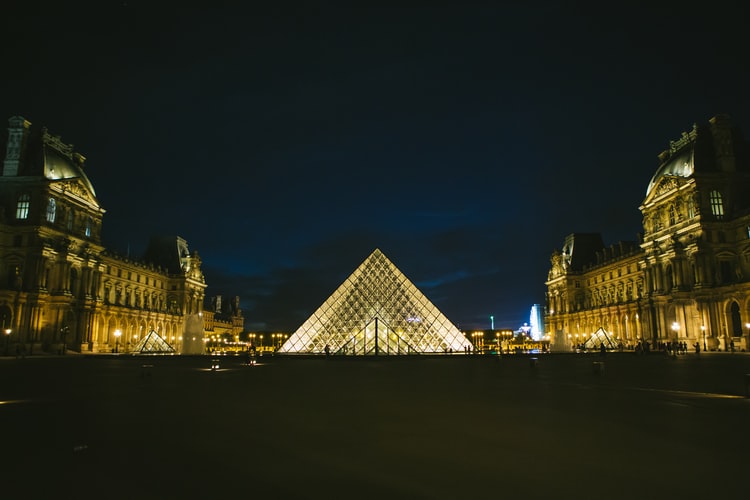
The Louvre is the world’s largest museum and houses one of the most impressive art collections in history. The magnificent, baroque-style palace and museum — LeMusée du Louvre in French — sits along the banks of the Seine River in Paris.
The history of the Louvre began toward the end of 1.100 A.D. in the area where there was a fortress, which later was converted into the royal residence and the secondary residence of Charles V in the 14th century. In the Renaissance period the Louvre became the main seat of the kings of France, and was Catherine de’Medici who enlarged and transformed the building. The Louvre lost its function of royal residence at the time of Louis XIV, who moved his court to the new Palace of Versailles. Since 1793 at the Louvre was created the Muséum Central des Arts, renamed in 1803 the Musée Napoléon.
So, originally the building of the Louvre wasn’t a museum, but became a museum only during the Enlightenment, when artists and craftsmen spent their time admiring and copying the works of the ancients. In the late 18th century and right after the French Revolution, began the acquisition of a large number of works that added to the initial and casual collection of the kings of France, to which were added the works of art coming from the most important European art collections and which arrived in France as spoils of the successful military campaigns of Napoleon.
The Louvre Museum is the result of a long work, started two centuries ago, made of collecting and organizing works and finds in order to create the most completed overview ever of what man has created from the Neolithic to nowadays.
 European Culture