
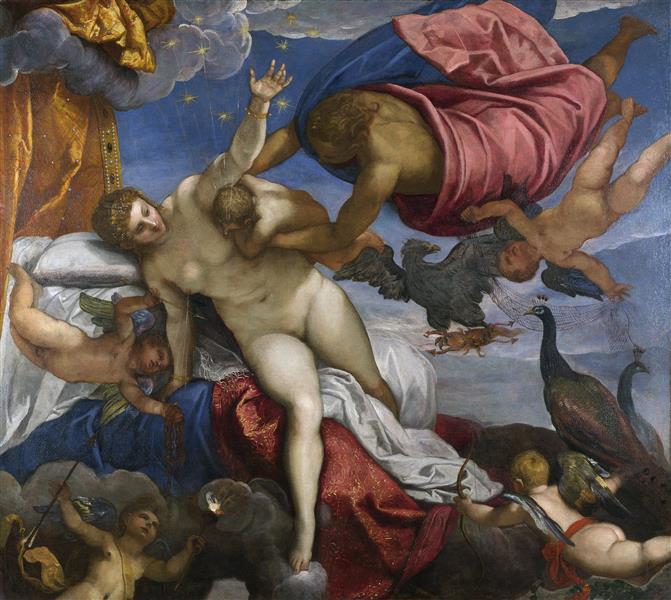
Title: The Origin of the Milky Way
Author: Tintoretto
Date: 1575
Style: Mannerism
Genre: mythological painting
Media: oil, canvas
Location: National Gallery, London, UK

Title: The Origin of the Milky Way
Author: Tintoretto
Date: 1575
Style: Mannerism
Genre: mythological painting
Media: oil, canvas
Location: National Gallery, London, UK

Title: Romulus and Remus
Author: Peter Paul Rubens
Year: 1615
Genre: mythological painting
Medium: oil on canvas
Location: Capitoline Museums – Rome , Italy

Title: Pallas and Centaur
Author: Sandro Botticelli
Year: 1482
Style: Renaissance
Genre: mythological painting
Location: Uffizi Gallery, Florence, Italy

Title: Medusa
Author: Caravaggio
Year: 1597
Style: Baroque
Genre: mythological painting
Media: oil, canvas
Location: Uffizi Gallery, Florence, Italy
Medusa was a Gorgon monster, a terrifying female creature from the Greek Mythology. While descriptions of Gorgons vary across Greek literature, the term commonly refers to any of three sisters who had hair of living, venomous snakes, and a horrifying visage that turned those who beheld it to stone. Traditionally, while two of the Gorgons were immortal, Stheno and Euryale , their sister Medusa was not, and was slain by the mythical hero Perseus, the legendary founder of Mycenae and of the Perseid dynasty. According to the story, she was killed by Perseus, who avoided direct eye contact by using a mirrored shield. After Medusa’s death, her decapitated head continued to petrify those that looked at it.
[SOURCE:wikiart.org]

Title: Orpheus and Eurydice
Author: Michel Martin Drolling
Year: 1820
Orpheus was the son of Apollo and Calliope, the Muse. Apollo gave his son a lyre and taught him how to play; Orpheus did to such perfection that even Apollo was surprised. It is said that nothing could resist to his music and melody, neither friends nor enemies or beasts. Even trees and rocks were entranced with his music.
Orpheus fell in love with Eurydice a woman of unique beauty; they got married and lived happily for many years. Hymen was called to bless the marriage and he predicted that their perfection was not meant to last for years.
At some time, soon after his omen, Eurydice was wandering in the forest with the Nymphs, when Aristaeus, a shepherd saw her and was beguiled by her beauty. He started chasing her and making advances on her. Eurydice got scared and tried to escape, but she was bitten by a snake and died.
Orpheus sang his grief with his lyre and managed to move everything living or not on the world; both humans and Gods were deeply touched by his sorrow and grief.
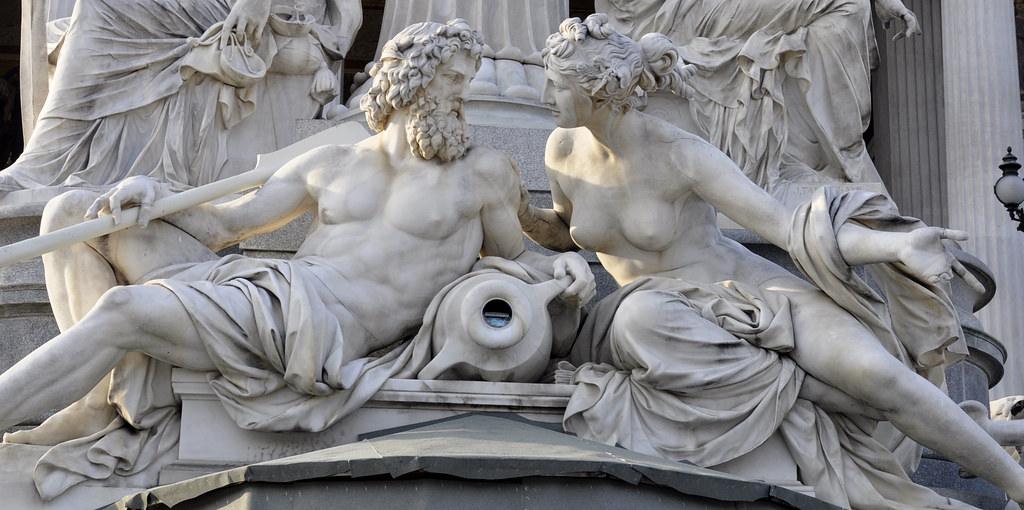
Zeus and Hera – Athena Fountain by Carl Kundmann, Josef Tautenhayn and Hugo Haerdtl. Austrian Parliament Building, Vienna.
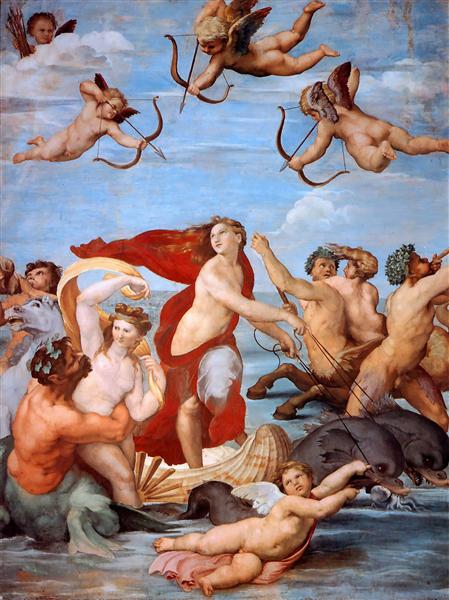
Title: The Triumph of Galatea
Author: Raffaello Sanzio da Urbino
Year: 1512
Style: High Renaissance
Genre: mythological painting
Location: Villa Farnesina, Rome, Italy
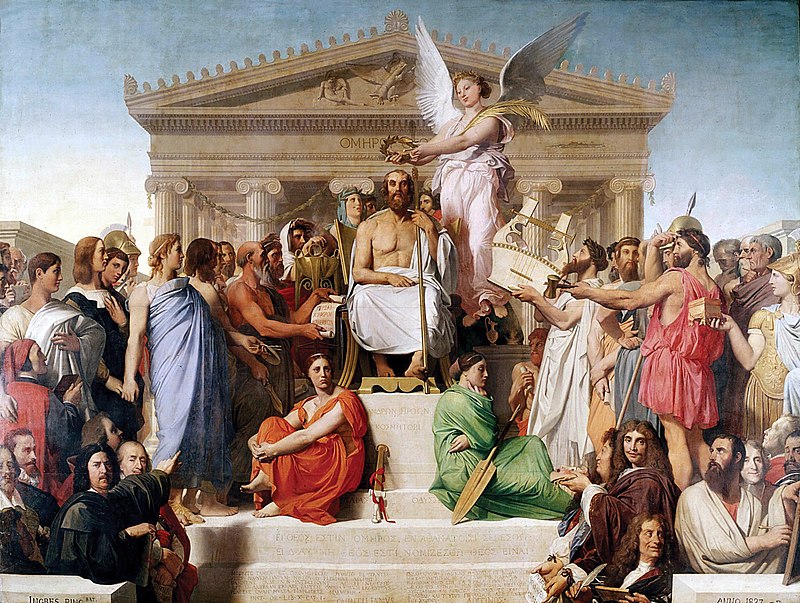
Title: The Apotheosis of Homer
Author: Jean Auguste Dominique Ingres
Year: 1827
Genre: mythological painting
Style: Neoclassicism
Media: oil, canvas
Location: Louvre, Paris, France
Ingres created this painting by combining over 100 small drawings for the assorted characters, each one making the drawing more detailed and precise. The painting was a state commission by Charles X to have himself remembered in the building works of the Louvre. The painting depicts an image of Homer, receiving all of the brilliant men of Rome, Greece, and contemporary times. The characters in the painting were extensively researched by Ingres, who studied the paintings of Nicholas Poussin, Raphael, and Apelles, the ancient Greek painter. The painting also includes the figures of Dante, Virgil, and Moliere, the French playwright, along with other figures, including Greek and Roman Gods.
[ SOURCE: Wikiart.org ]

Title: The Triumph of Bacchus
Author: Niccolò Possino
Year: 1635
Medium: oil on canvas
Location: Nelson-Atkins Museum of Art
Bacchus, the god of wine, leads this entourage of mythological characters in a triumphal return from victories in India. His chariot is drawn by centaurs, mythical creatures who are half human and half horse. Accompanying him are Pan with his pipes and Hercules, who has stolen a tripod from Apollo, the sun god, seen driving his chariot across the sky. A river god, symbolizing the river Indus and the Indian subcontinent, lounges in the lower right foreground. Nicolas Poussin spent most of his career in Rome and was the prime inspiration for the classical revival in French art. This painting was one of a series of three commissioned by the famous French statesman Cardinal Richelieu.
[SOURCE: artsandculture.google.com]

Title: Mars and Venus united by love
Author: Paolo Veronese
Year: 1470
Genre: Mythological
Medium: Oil on canvas
Movement: Mannerism
 European Culture