
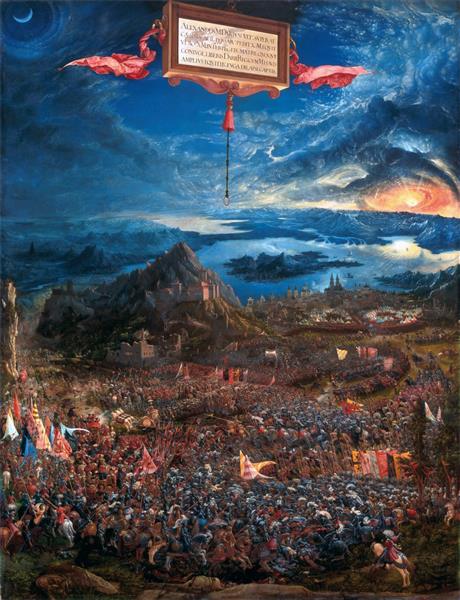
Title: The battle of Issus
Author: Albrecht Altdorfer
Year: 1529
Style: Renaissance
Media: oil, wood
Location: Bavarian State Painting Collections – Germany

Title: The battle of Issus
Author: Albrecht Altdorfer
Year: 1529
Style: Renaissance
Media: oil, wood
Location: Bavarian State Painting Collections – Germany

Author: Jan Brueghel the Elder
Title: Baño de Ninfas
Medium: oil on panel
Year: 1585
Location: Museo Nacional de Bellas Artes
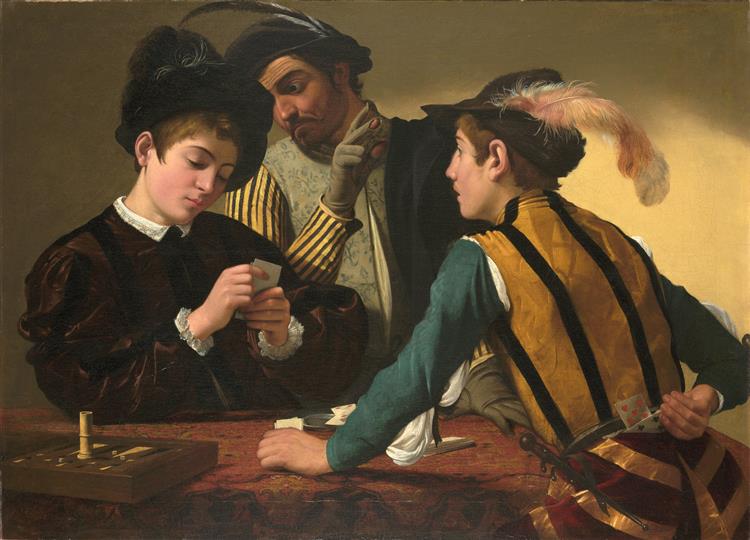
Title: Cardsharps
Author: Caravaggio
Year: 1594
Style: Baroque
Media: oil, canvas
Location: Kimbell Art Museum – USA
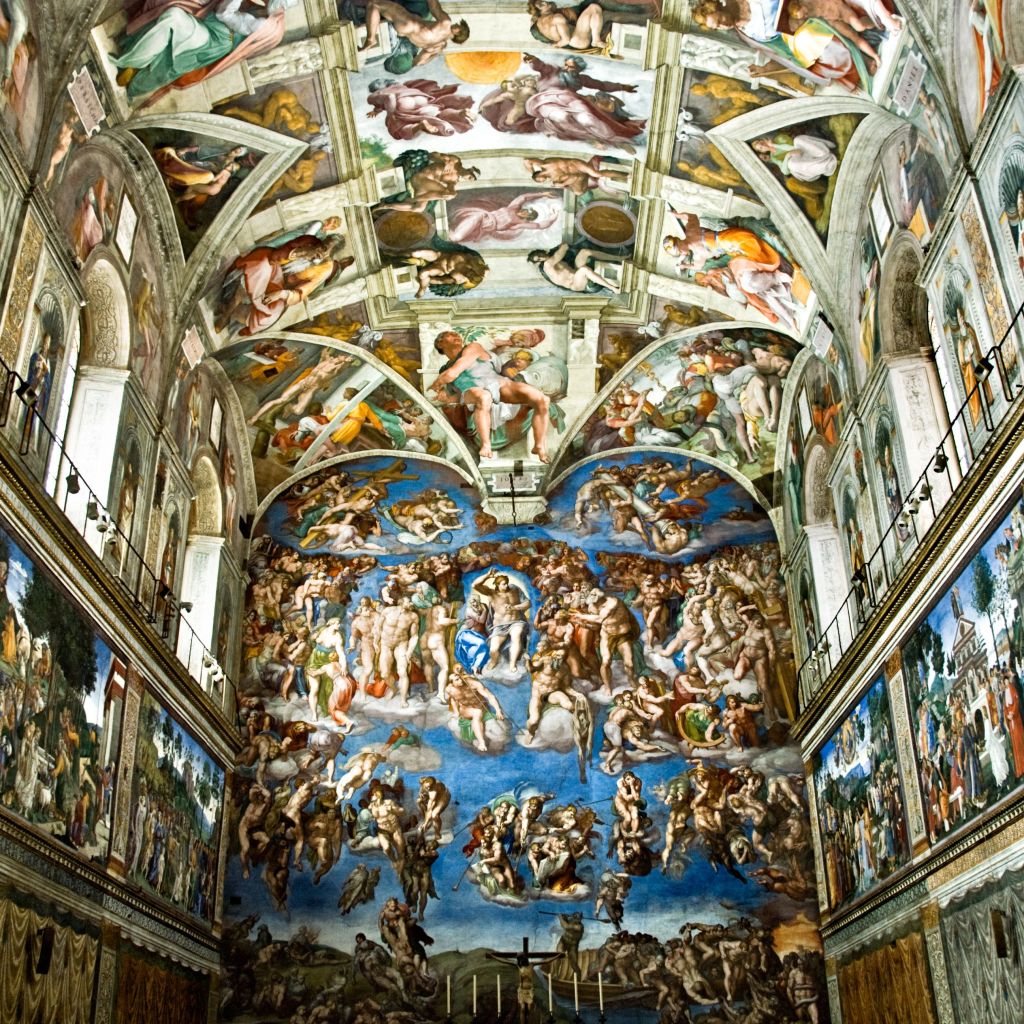
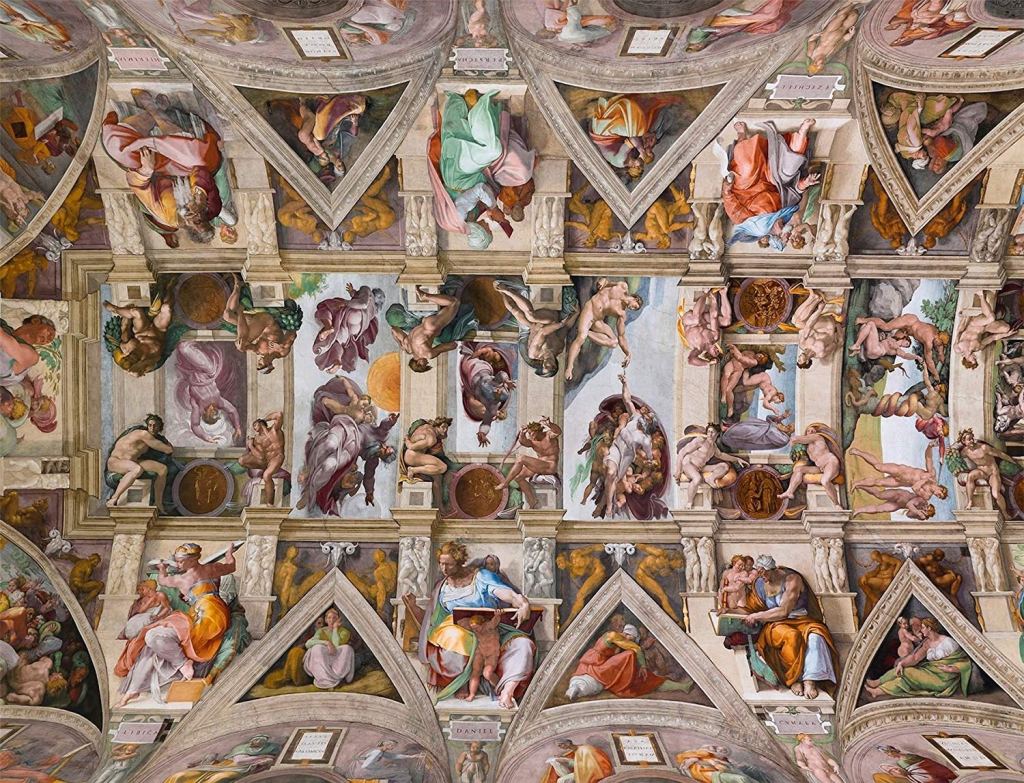
Artist: Michelangelo
Dimensions: 40 m x 14 m
Art form: Fresco
Location: Sistine Chapel , Vatican
Created: 1508–1512
Period or movement: High Renaissance
The Sistine Chapel stands on the foundation of an older chapel called the Capella Magna. In 1477, Pope Sixtus IV instigated a rebuilding of the chapel, which was then named for him.
The chapel is 40.23 meters long, 13.40 meters wide, and 20.70 meters high (about 132 by 44 by 68 feet) — reputedly, the dimensions of Solomon’s temple in Jerusalem, which was destroyed in A.D. 70. The chapel’s exterior is simple and unassuming, giving little hint to the splendid decoration inside.
Pope Sixtus IV commissioned celebrated painters, including Botticelli and Rosselli, to decorate the chapel. At this point, the Sistine Chapel’s ceiling was painted like a simple blue sky with stars.
In 1503, a new pope, Julius II, decided to change some of the Sistine Chapel’s decoration. He commanded artist Michelangelo to do it. Michelangelo balked, because he considered himself a sculptor, not a painter, and he was hard at work sculpting the king’s tomb. But Pope Julius insisted, and Michelangelo began work on his famous frescoed ceiling in 1508. He worked for four years. It was so physically taxing that it permanently damaged his eyesight.
More than 20 years later, Pope Clement VII commissioned Michelangelo to paint the giant fresco “The Last Judgment” behind the altar. The artist, then in his 60s, painted it from 1536 to 1541.
[SOURCE:livescience.com]
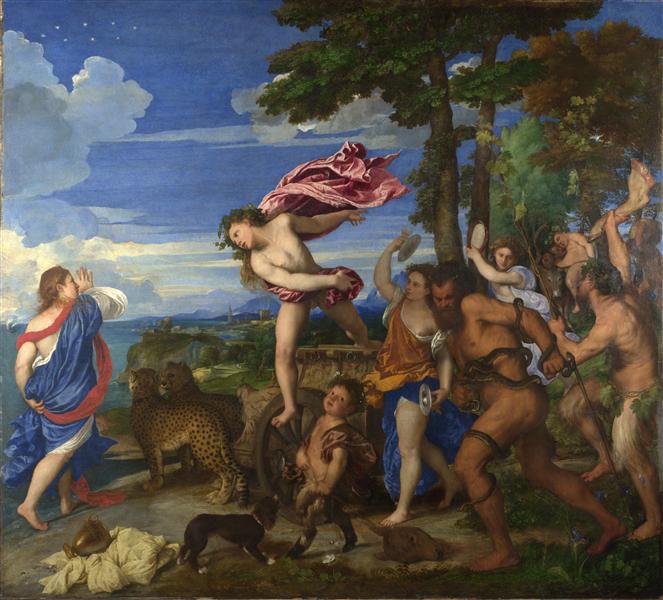
Title: Bacchus and Ariadne
Author: Titian
Year: 1520
Genre: mythological painting
Media: oil, canvas
Location: National Gallery London UK
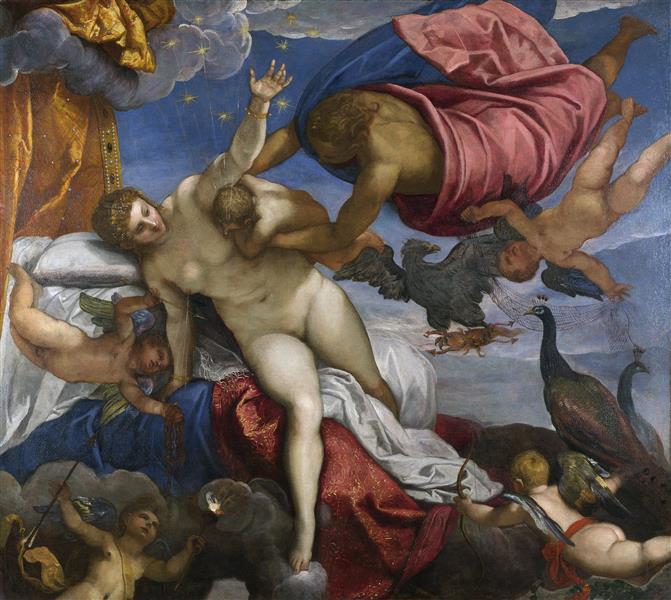
Title: The Origin of the Milky Way
Author: Tintoretto
Date: 1575
Style: Mannerism
Genre: mythological painting
Media: oil, canvas
Location: National Gallery, London, UK

Title: Medusa
Author: Caravaggio
Year: 1597
Style: Baroque
Genre: mythological painting
Media: oil, canvas
Location: Uffizi Gallery, Florence, Italy
Medusa was a Gorgon monster, a terrifying female creature from the Greek Mythology. While descriptions of Gorgons vary across Greek literature, the term commonly refers to any of three sisters who had hair of living, venomous snakes, and a horrifying visage that turned those who beheld it to stone. Traditionally, while two of the Gorgons were immortal, Stheno and Euryale , their sister Medusa was not, and was slain by the mythical hero Perseus, the legendary founder of Mycenae and of the Perseid dynasty. According to the story, she was killed by Perseus, who avoided direct eye contact by using a mirrored shield. After Medusa’s death, her decapitated head continued to petrify those that looked at it.
[SOURCE:wikiart.org]
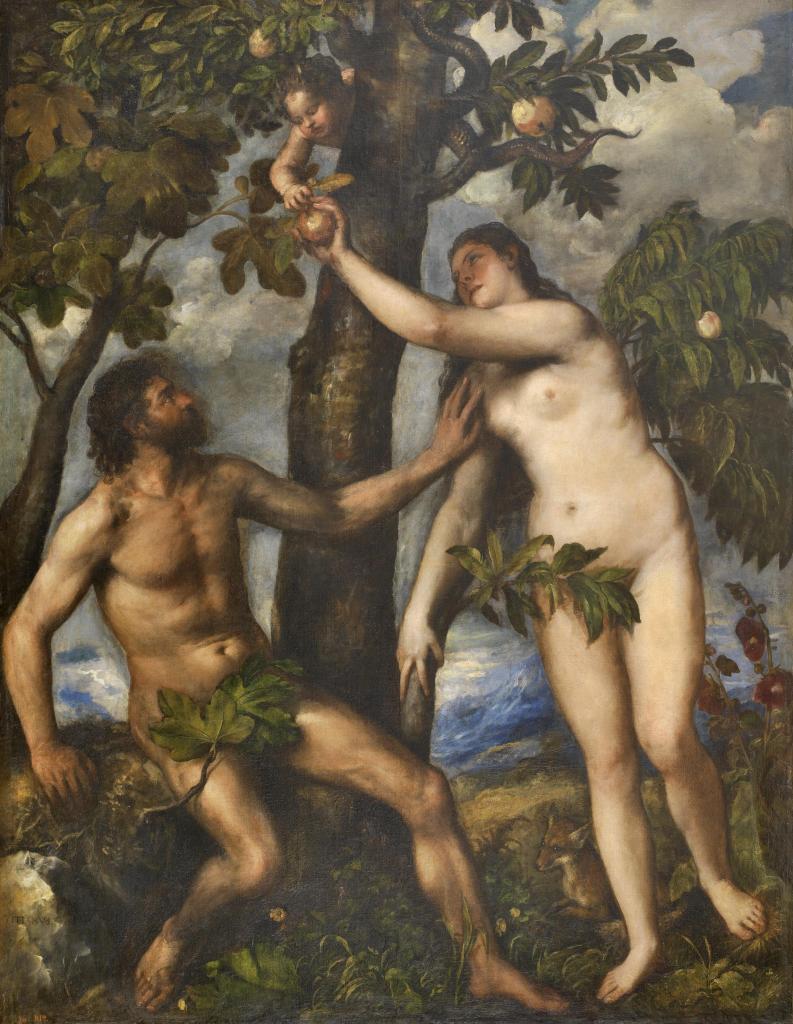
Title: The Fall of Man
Author: Titian
Year: 1550
Style: Mannerism
Genre: religious painting
Media: oil, canvas
Location: Museo del Prado, Madrid, Spain
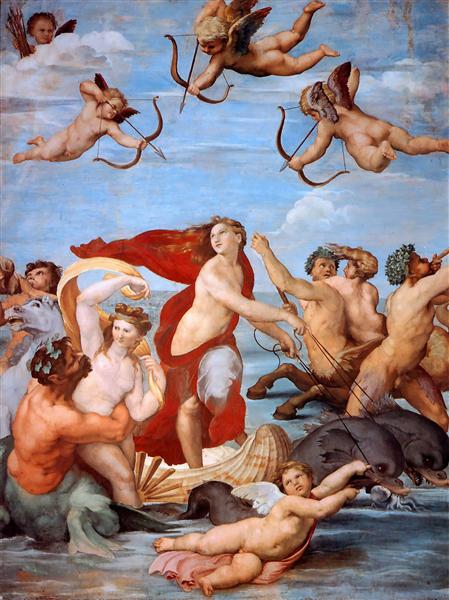
Title: The Triumph of Galatea
Author: Raffaello Sanzio da Urbino
Year: 1512
Style: High Renaissance
Genre: mythological painting
Location: Villa Farnesina, Rome, Italy
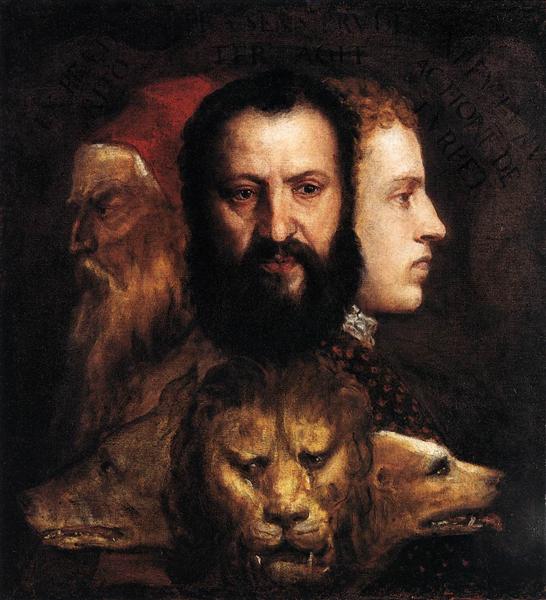
Title: Allegory of Time Governed by Prudence
Author: Titian
Year: 1565
Style: Mannerism
Genre: allegorical painting
Media: oil, canvas
Location: National Gallery, London, UK
The painting portrays three human heads, each facing in a different direction, above three animal heads, depicting (from left) a wolf, a lion and a dog. The painting is usually interpreted as operating on a number of levels. At the first level, the different ages of the three human heads represent the “Three Ages of Man” (youth, maturity, old age). The different directions in which they are facing reflect a second, wider concept of Time itself as having a past, present and future. This theme is repeated in the animal heads which, according to some traditions, are associated with those categories of time.
 European Culture