” Odin ”

( Statue of Odin in Hannover, Germany )

Odin is one of the most complex and enigmatic characters in Norse mythology, and perhaps in all of world literature. He’s the ruler of the Aesir tribe of deities, yet he often ventures far from their kingdom, Asgard, on long, solitary wanderings throughout the cosmos on purely self-interested quests. He’s a relentless seeker after and giver of wisdom, but he has little regard for communal values such as justice, fairness, or respect for law and convention. He’s the divine patron of rulers, and also of outlaws. He’s a war-god, but also a poetry-god, and he has prominent “effeminate” qualities that would have brought unspeakable shame to any historical Viking warrior. He’s worshiped by those in search of prestige, honor, and nobility, yet he’s often cursed for being a fickle trickster.

” Hylas and the Nymphs ”

Title: Hylas and the Nymphs

Artist: John William Waterhouse

Year: 1896

Type: Oil on canvas

Hylas and the Nymph is an oil on canvas painting undertaken by Baron François Gérard in about 1826 showing a story from Greek mythology. 

The painting Hylas and the Nymph depicts the moment when the Greek hero Hylas is abducted by a Naiad Nymph.

Hylas was an Argonaut, who had joined the crew of the Argo alongside his friend Heracles. When the Argo stopped for water in Mysia, the Naiad fell in love with the beautiful Hylas. Heracles would be abandoned by Jason when he stopped to look for his companion, but Hylas was never found by Heracles. 


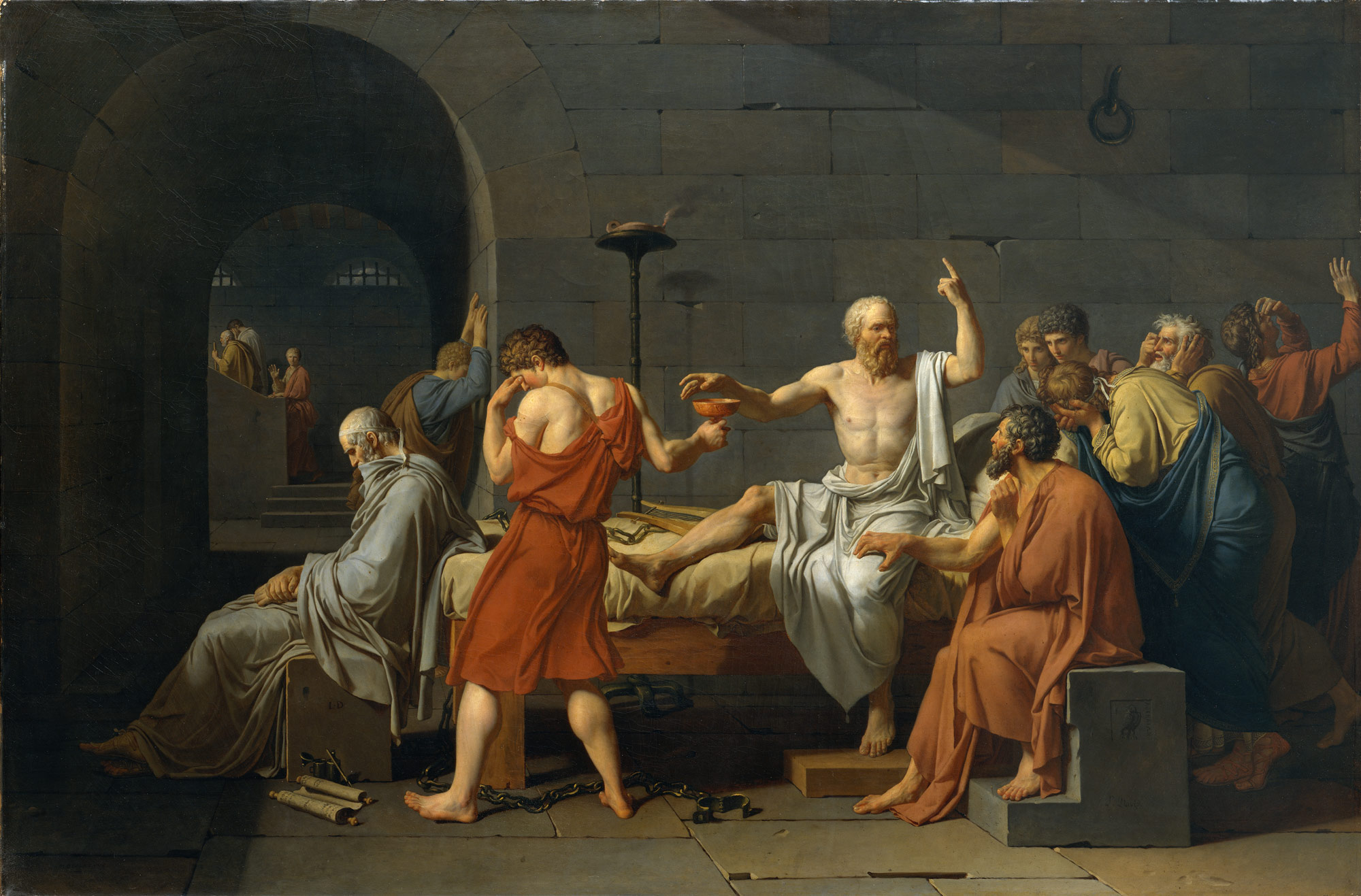
”The Death of Socrates”

The Death of Socrates

Artist: Jacques Louis David

Date: 1787

Medium: Oil on canvas

Dimensions: 51 x 77 1/4 in. (129.5 x 196.2 cm)

The Athenian courts executed the Greek philosopher Socrates (469–399 B.C.) for the crime of impiety: his behavior toward the gods was judged to have been irreverent, and he had exerted a corrupting influence on his young male followers. Socrates declined to renounce his beliefs and died willingly, discoursing on the immortality of the soul before drinking from the cup of poisonous hemlock. In a prison of unrelieved severity, David depicted a frieze of carefully articulated figures in antique costume acting out in the language of gesture the last moments of the moral philosopher’s life. Because, shortly before the onset of the French revolution, the painting gave expression to the principle of resisting unjust authority, it is among David’s most important works. The canvas is also his most perfect statement of the Neoclassical style.