
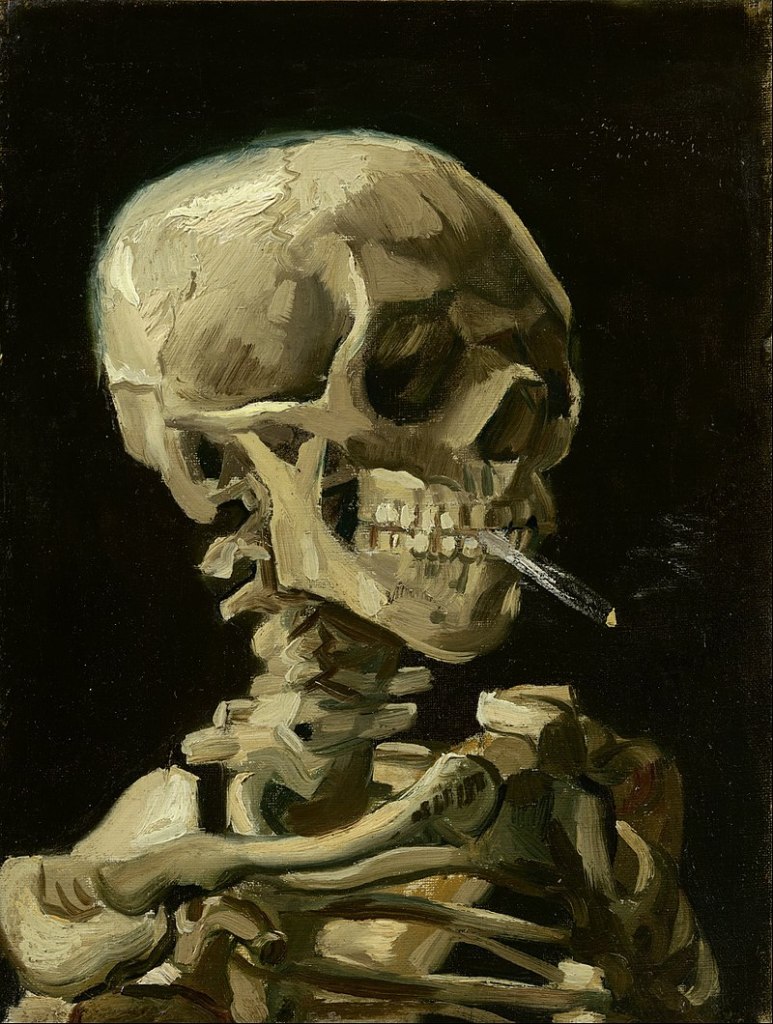
Title: Head of a skeleton with a burning cigarette
Author: Vincent van Gogh
Year: 1885
Medium: Oil on canvas
Location: Van Gogh Museum – Amsterdam

Title: Head of a skeleton with a burning cigarette
Author: Vincent van Gogh
Year: 1885
Medium: Oil on canvas
Location: Van Gogh Museum – Amsterdam
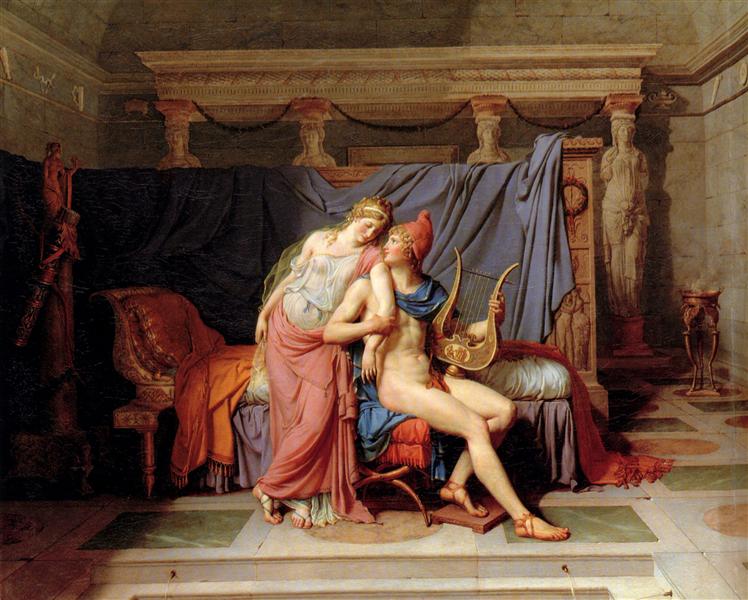
Title: Paris and Helen
Author: Jacques-Louis David
Year: 1788
Style: Neoclassicism
Genre: mythological painting
Media: oil, canvas
Location: Louvre, Paris, France
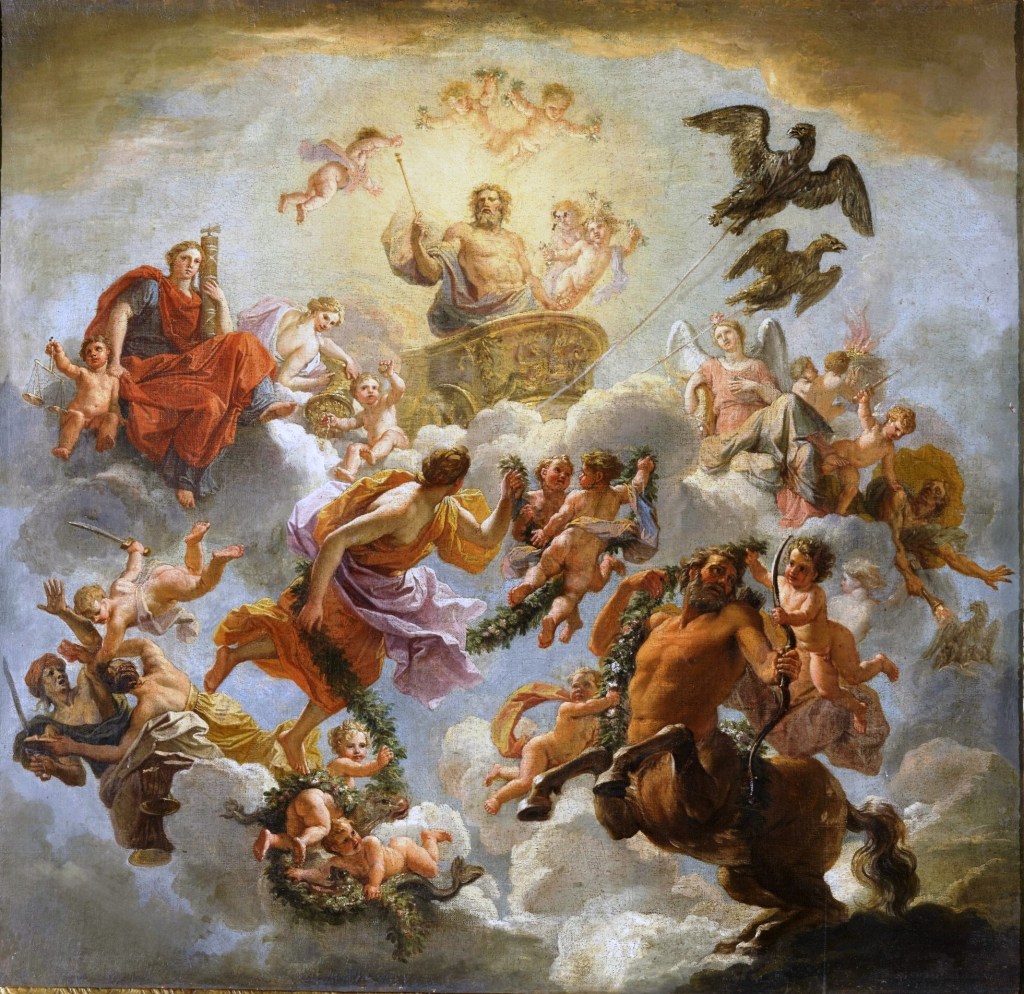
Title: Jupiter Chariot between Justice and Piety
Author: Noël Coypel
Year: 1671
Medium: oil on canvas
Location: Château de Versailles France
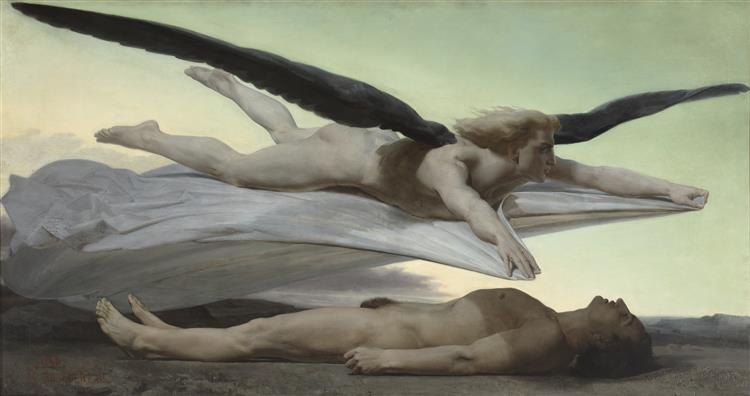
Title: Equality before Death
Author: William-Adolphe Bouguereau
Year: 1848
Style: Neoclassicism
Media: oil, canvas
Location: Musée d’Orsay, Paris, France
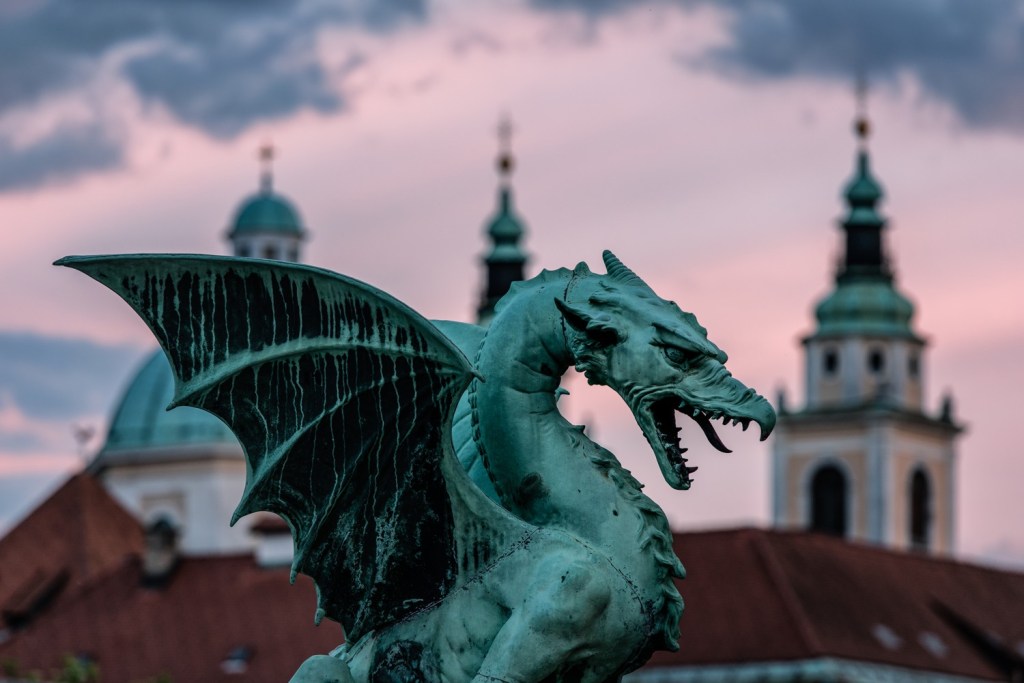
”The Dragon Bridge statue”
(designed by the Italian engineer and architect Giorgio Zaninovich)
Year: 1901
Location: Ljubljana , Slovenia

Title: Hearing
Author: Peter Paul Rubens
Date: 1617
Style: Baroque
Location: Museo del Prado, Madrid-Spain
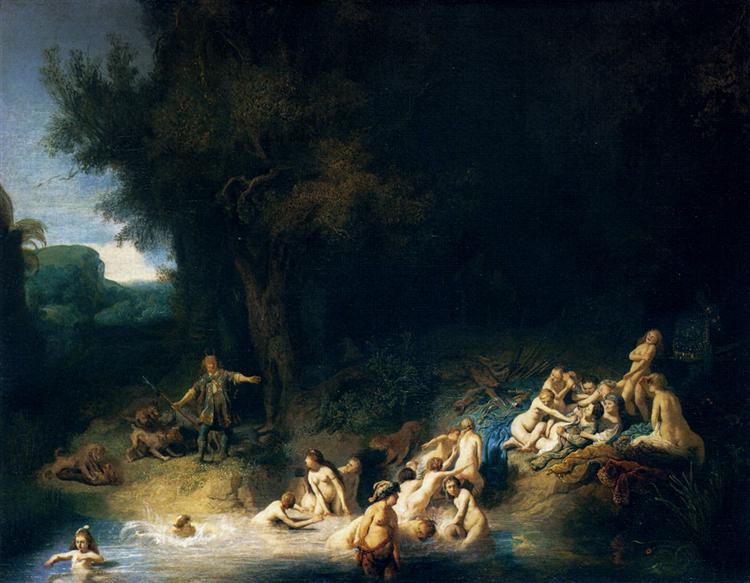
Title: Diana Bathing, with the Stories of Actaeon and Callisto
Author: Rembrandt
Year: 1634
Style: Baroque
Genre: mythological painting
Media: oil, canvas
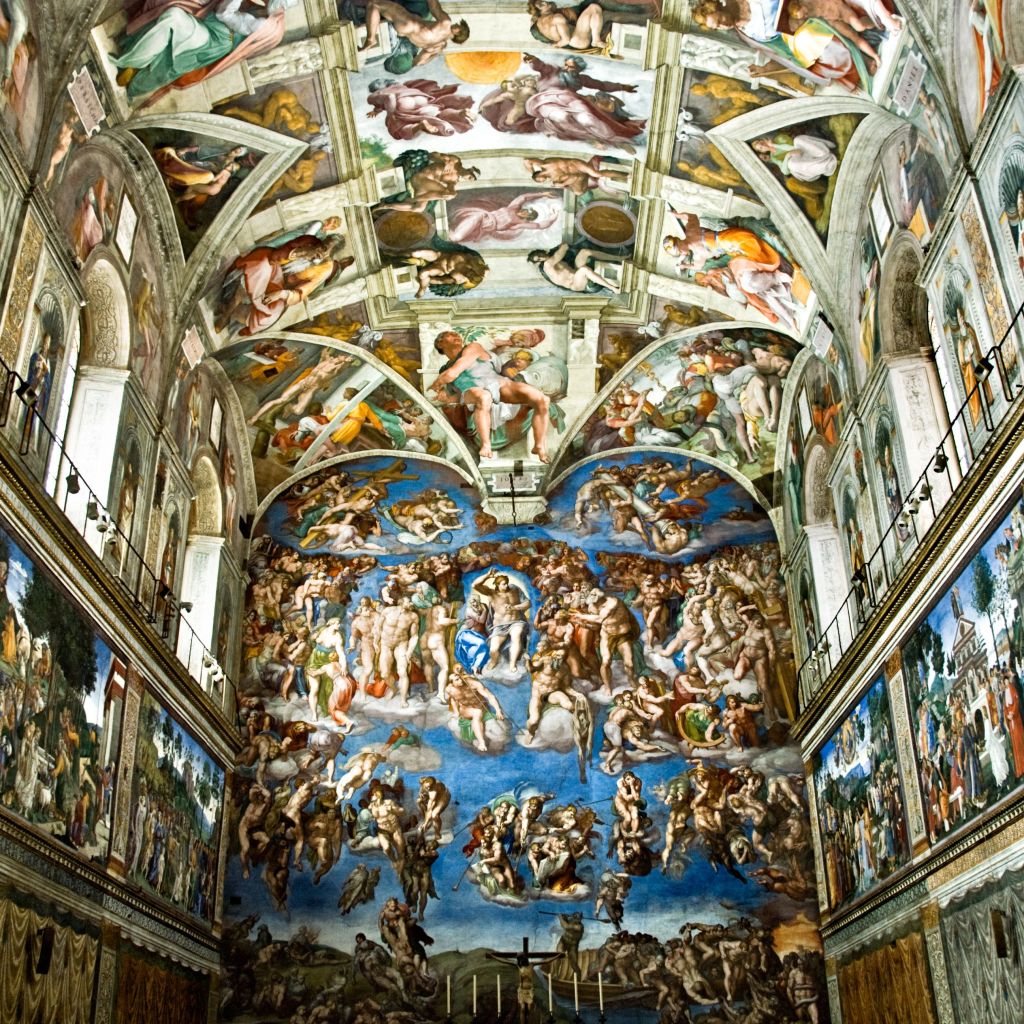
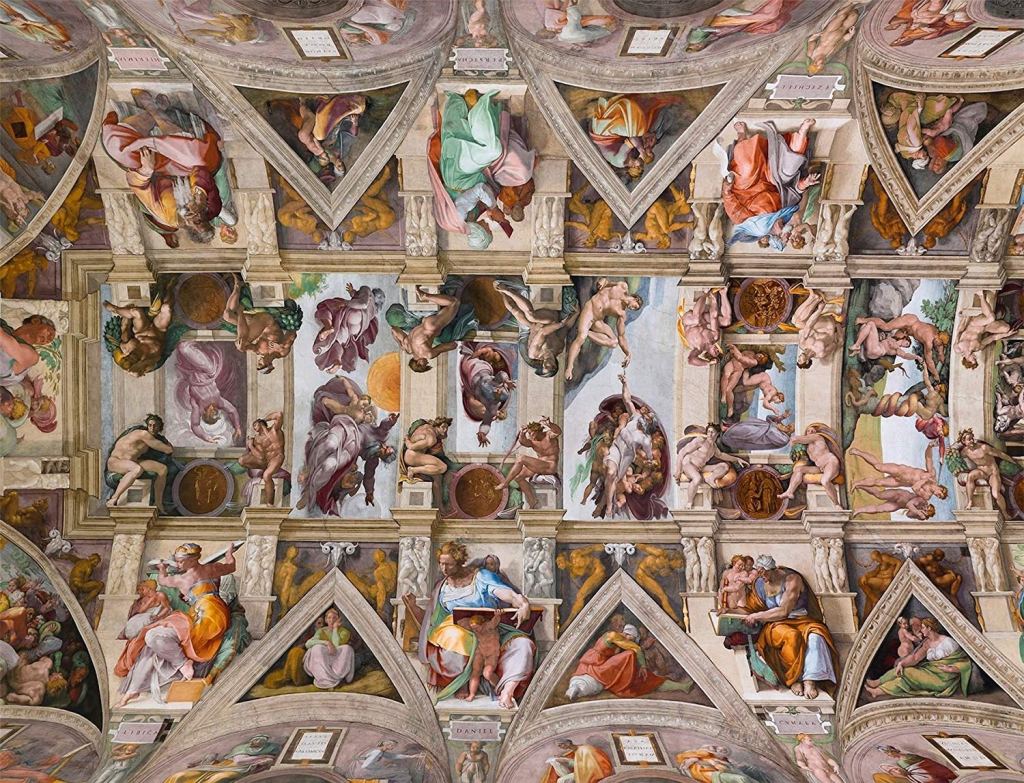
Artist: Michelangelo
Dimensions: 40 m x 14 m
Art form: Fresco
Location: Sistine Chapel , Vatican
Created: 1508–1512
Period or movement: High Renaissance
The Sistine Chapel stands on the foundation of an older chapel called the Capella Magna. In 1477, Pope Sixtus IV instigated a rebuilding of the chapel, which was then named for him.
The chapel is 40.23 meters long, 13.40 meters wide, and 20.70 meters high (about 132 by 44 by 68 feet) — reputedly, the dimensions of Solomon’s temple in Jerusalem, which was destroyed in A.D. 70. The chapel’s exterior is simple and unassuming, giving little hint to the splendid decoration inside.
Pope Sixtus IV commissioned celebrated painters, including Botticelli and Rosselli, to decorate the chapel. At this point, the Sistine Chapel’s ceiling was painted like a simple blue sky with stars.
In 1503, a new pope, Julius II, decided to change some of the Sistine Chapel’s decoration. He commanded artist Michelangelo to do it. Michelangelo balked, because he considered himself a sculptor, not a painter, and he was hard at work sculpting the king’s tomb. But Pope Julius insisted, and Michelangelo began work on his famous frescoed ceiling in 1508. He worked for four years. It was so physically taxing that it permanently damaged his eyesight.
More than 20 years later, Pope Clement VII commissioned Michelangelo to paint the giant fresco “The Last Judgment” behind the altar. The artist, then in his 60s, painted it from 1536 to 1541.
[SOURCE:livescience.com]
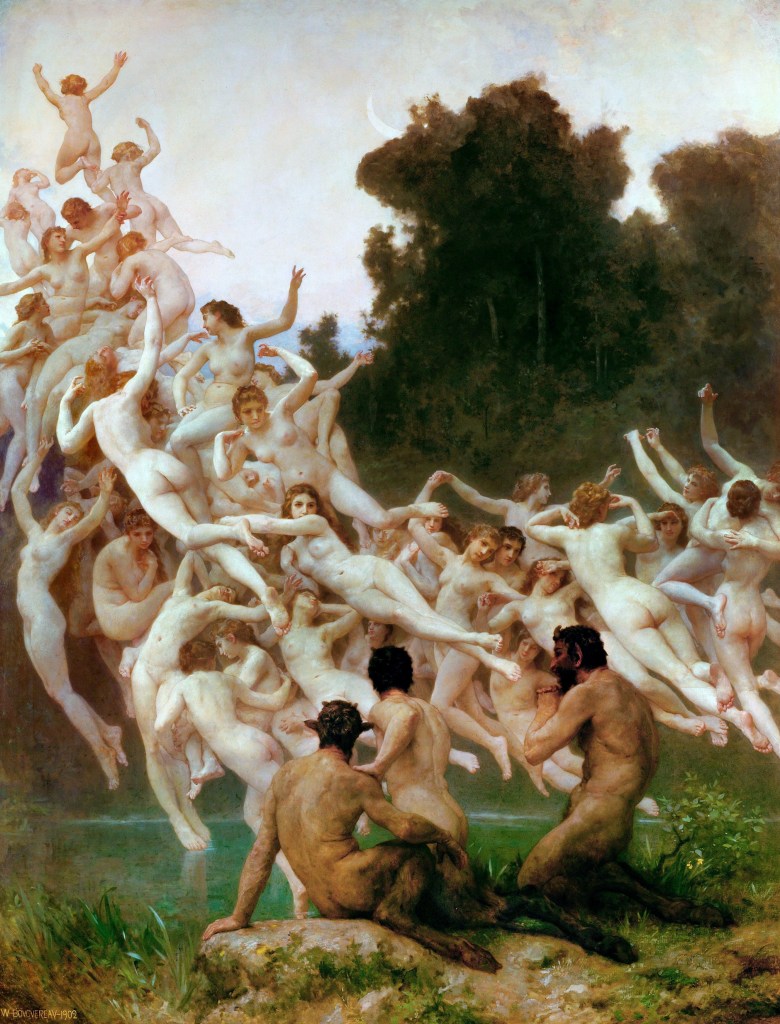
Title: The Oreads
Author: William-Adolphe Bouguereau
Year: 1902
Style: Neoclassicism
Genre: mythological painting
Media: oil, canvas
Location: Musée d’Orsay, Paris, France

Title: The Triumph of Amphitrite
Author: Hugues Taraval
Year: 1780
Medium: oil on canvas
Location: Mead Art Museum
 European Culture