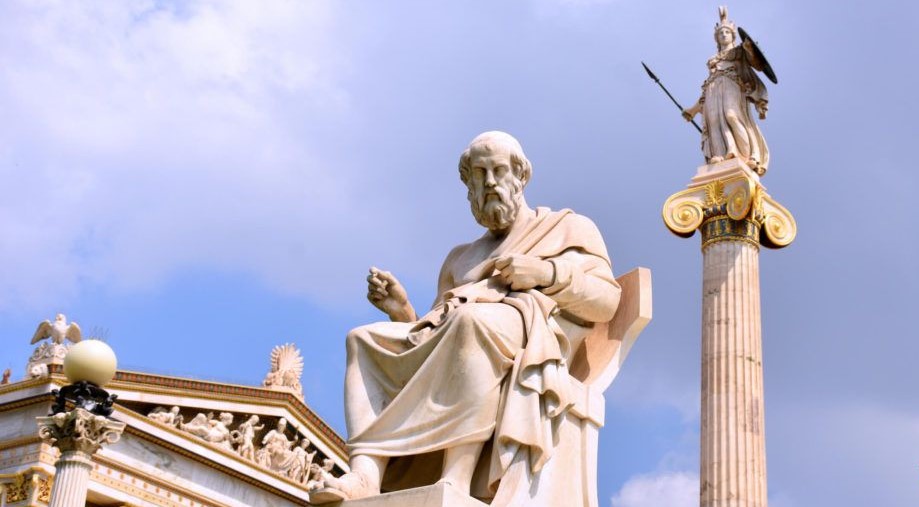
Plato (423 BC – 348 BC) was a Classical Greek philosopher, mathematician, student of Socrates, writer of philosophical dialogues, and founder of the Academy in Athens – the first institution of higher learning in the Western world. Along with his mentor, Socrates, and his student, Aristotle, Plato helped to lay the foundations of Western philosophy and science. Plato influenced a whole range of subjects from philosophy to maths, logic and ethics.
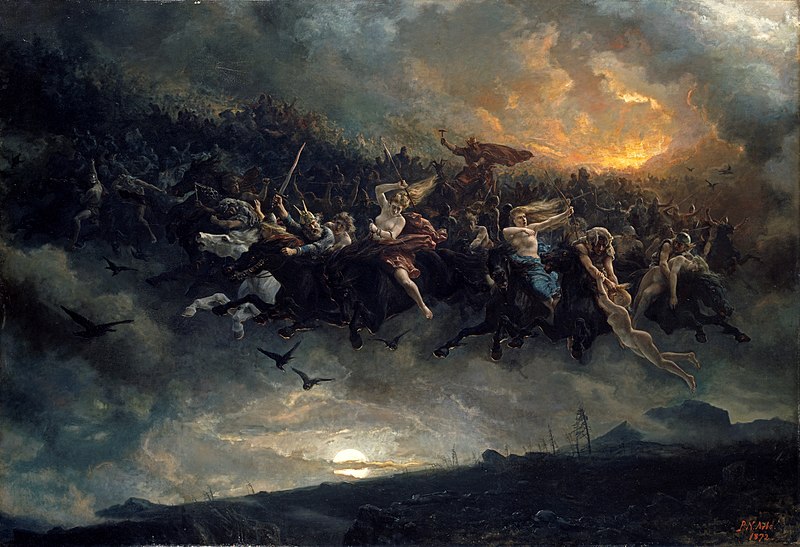
The painting is based on the Wild Huntmotif from folklore and Norse mythology. In the Scandinavian tradition, the Wild Hunt is often associated with the god Odin who leads a terrifying procession of gods, trolls and restless souls that hurl across the sky during midwinter and abduct unfortunate people who have failed to find a hiding place
Vincent van Gogh painted Starry Night in 1889 during his stay at the asylum of Saint-Paul-de-Mausole near Saint-Rémy-de-Provence. Van Gogh lived well in the hospital; he was allowed more freedoms than any of the other patients. If attended, he could leave the hospital grounds; he was allowed to paint, read, and withdraw into his own room. He was even given a studio. While he suffered from the occasional relapse into paranoia and fits – officially he had been diagnosed with epileptic fits – it seemed his mental health was recovering. Unfortunately, he relapsed. He began to suffer hallucination and have thoughts of suicide as he plunged into depression. Accordingly, there was a tonal shift in his work. He returned to incorporating the darker colors from the beginning of his career and Starry Night is a wonderful example of that shift. Blue dominates the painting, blending hills into the sky. The little village lays at the base in the painting in browns, greys, and blues. Even though each building is clearly outlined in black, the yellow and white of the stars and the moon stand out against the sky, drawing the eyes to the sky. They are the big attention grabber of the painting.
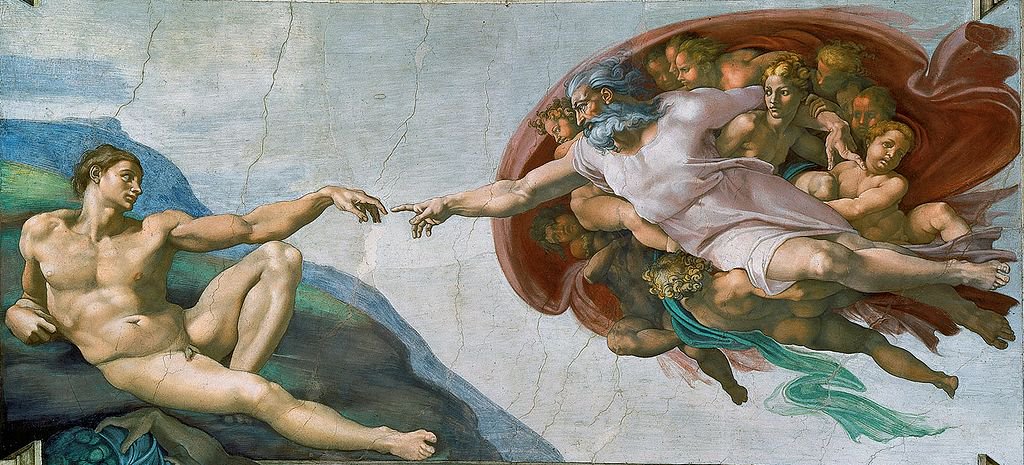
The panel of The Creation of Adam in the Sistine Chapel must be one of the most known images in the world. Completed by Michelangelo circa 1511, it depicts God the father creating Adam, the first man and was amongst the last panels to be completed, telling the story of Genesis. The focal point of the episode of the Creation of Adam painting is the contact between the fingers of God and those of Adam, through which the breath of life is transmitted. By not painting the fingers of God and Adam touching and leaving a small space between the two, Michelangelo creates a tingling tension, an anticipation of that wonderous moment, as we all wait for God to complete his Creation of Adam.
Michelangelo’s languid Adam was probably inspired by Ghiberti’s Adam on his Doors of Paradise of the baptistery in Florence. Whereas in his, The Creation of Eve, Michelangelo borrows heavily from Jacopo della Quercia’s version on the portal of San Petronio in Bologna. In the Eve panel Michelangelo did not use foreshortening, making the figures difficult to see clearly from the floor of the chapel. In the Creation of Adam, the great artist addresses this problem, with an obvious focus on the enlarged figures of God and Adam.
The painting of Michelangelo’s Creation of Adam only took two to three weeks to complete, while the actual painting of Adam took Michelangelo only four days! An admiring Vasari (1511 – 1574) gasped with amazement and said, “a figure of such a kind in its beauty, in the attitude and in the outlines, that it appears as if newly fashioned by the first and supreme Creator rather than by the brush and design of mortal man.” Today we see the Creation of Adam as a masterpiece within a masterpiece.
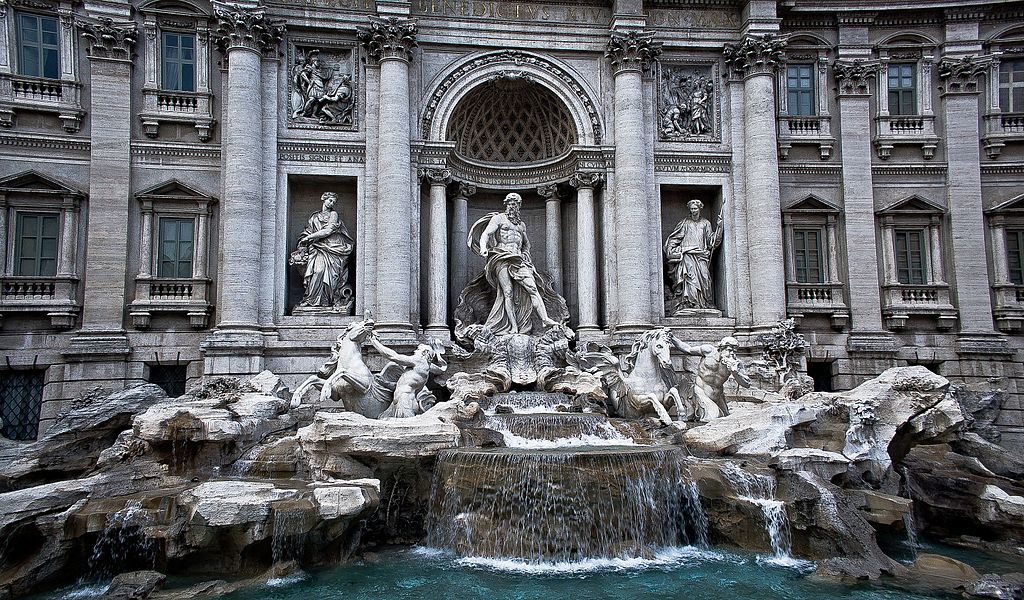
The Trevi fountain, inspired by Roman triumphal arches, is the largest and most famous Baroque fountain in Rome (standing 25.9 meters high and 19.8 meters wide). In 1629, Pope Urban VIII, asked Bernini to sketch possible renovations of the fountain, finding it insufficiently theatrical. After the Pope’s death the project was abandoned. Bernini’s lasting contribution was to situate the fountain from the other side of the square to face the Quirinal Palace (so that the Pope could see and enjoy it). The Trevi Fountain as we know it today, was designed by Nicola Salvi in 1732 and competed in 1762. The central figures of the fountain are Neptun (God of the sea), flanked by two Tritons. One struggles to master a veru unruly “sea horse”, the other lead a far more docile animal. These symbolize the two contrasting moods of the sea.
The site originally marked the terminal at the Aqua Virgo aqueduct built in 19 BC. One of the firts-storey reliefs shows a young girl (the legendary virgin after whom the aqueduct was named) pointing to the spring from which the water flows.
Tradition has it a coin thrown into the water guarantees a visitor’s return to Rome.
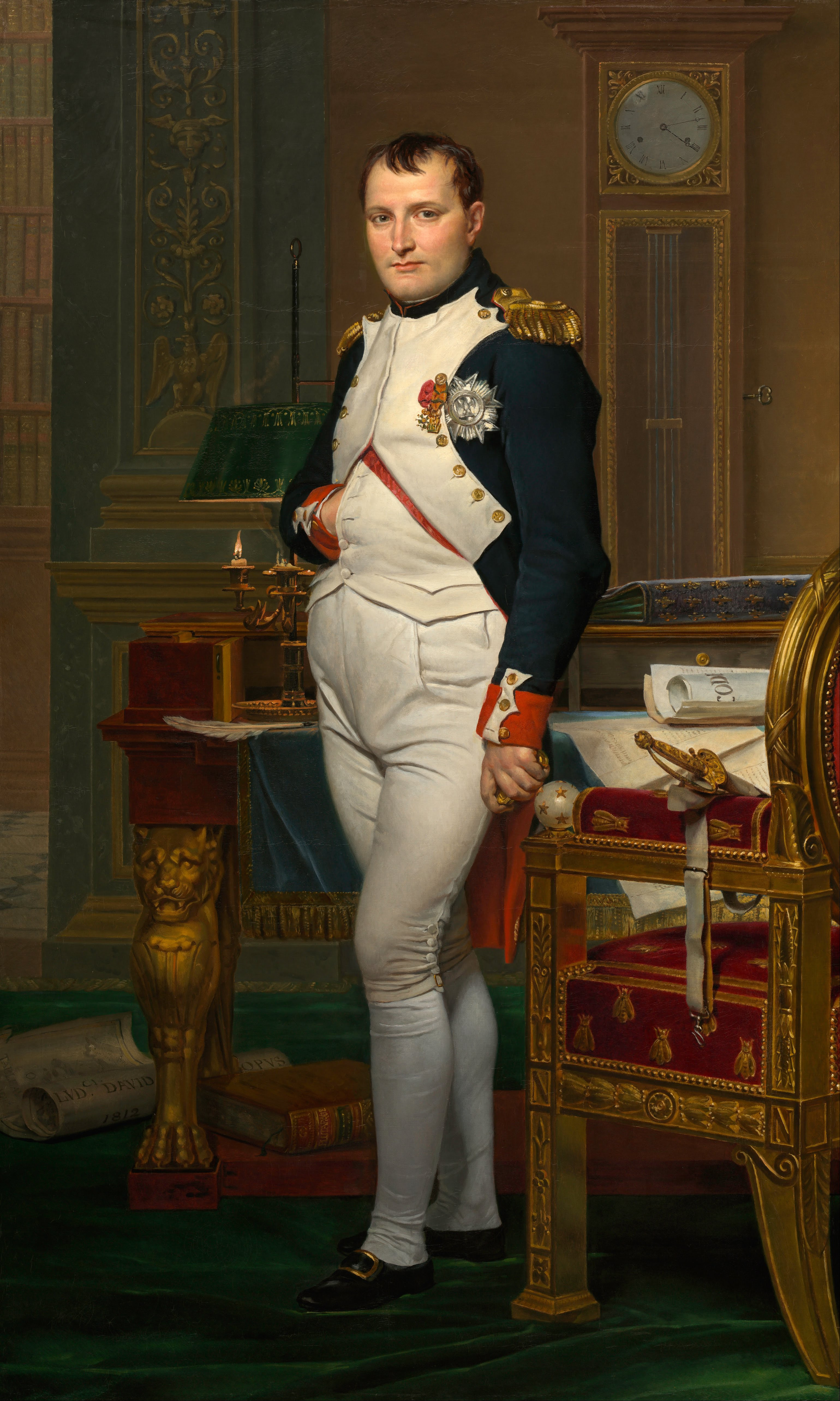
The Emperor Napoleon in His Study at the Tuileries painting by : Jacques-Louis David. ( year 1812 / Neoclassicism ) Private commission from the Scottish nobleman and admirer of Napoleon, Alexander Hamilton.
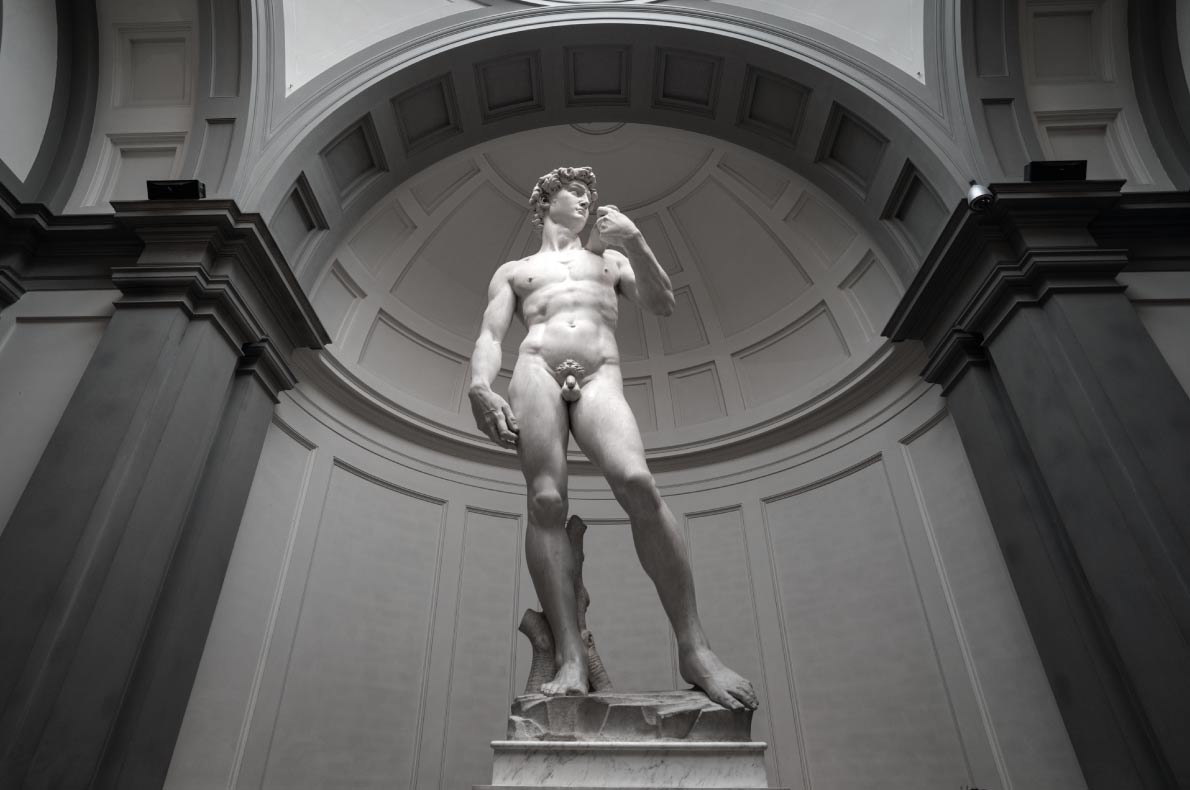
David is a masterpiece of Renaissance sculpture created in marble between 1501 and 1504 by the Italian artist Michelangelo. David is 5.17 m (17 feet) marble statue of the biblical hero David , a favored subject in the art of the Florence. (Galleria dell’Accademia, Florence, Italy)




 European Culture