

Title: Dream of omnipotence
Author: Giovanni Sottile
Location: Budapest , Hungary

Title: Dream of omnipotence
Author: Giovanni Sottile
Location: Budapest , Hungary

Title: The Art of Painting
Author: Johannes Vermeer
Year: 1666
Medium: Oil paint
Periods: Baroque, Dutch Golden Age
Location: Kunsthistorisches Museum Wien

Title: Battle of Alexander versus Darius
Author: Pietro da Cortona
Year: 1644
Medium: oil on canvas
Location: Rome, Italy

Title: Jupiter, Neptune and Pluto
Author: Caravaggio
Year: 1597
Type: Oil paint
Period: Baroque
Location: Villa Ludovisi, Rome

Title: Dante and Virgil
Author: William-Adolphe Bouguereau
Year: 1850
Media: oil, canvas
Period: Neoclassicism
Subject: Inferno
Location: Musée d’Orsay, Paris, France
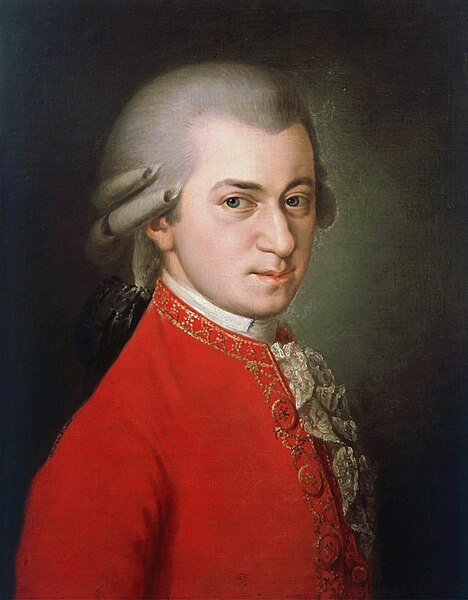
Title: Wolfgang Amadeus Mozart
Author: Barbara Krafft
Year: 1819
“Music is my life and my life is music. Anyone who does not understand this is not worthy of God.”
– Wolfgang Amadeus Mozart.
Mozart Biography
Wolfgang Amadeus Mozart (27 January 1756–5 December 1791) was one of the most influential, popular and prolific composers of the classical period.
Mozart was born in Salzburg to a musical family. From an early age, the young Mozart showed all the signs of a prodigious musical talent. By the age of five, he could read and write music, and he would entertain people with his talents on the keyboard. By the age of six, he was writing his first compositions. Mozart was generally considered to be a rare musical genius, although he was also diligent in studying other great composers such as Haydn and Bach. During his childhood, he would frequently tour various palaces around Europe playing for distinguished guests.
He created twenty-four operas including such famous works as “The Magic Flute”, “Don Giovanni” and “The Marriage of Figaro”, seventeen masses and over fifty symphonies. Mozart’s work, however, extended to all styles and types of music. He knew how to blend traditional and contemporary elements to create his own distinctive style, which is characterized by thematic and tonal variety, melded with a high degree of formal discipline. Mozart’s compositions live from their melodic, rhythmic and dynamic contrasts.
In 1791, on the 5th of December, Mozart died at the age of 35. However, the cause of his death still remains vague and researchers have listed at least 118 probable causes of his death. Legacy Though Mozart lived only for 35 years, Mozart’s legacy is unparalleled. With almost 600 musical pieces, Mozart’s influence reigns supreme in all the genres of music ranging from symphonies, concertos, operas, chamber music to piano solo. He is undoubtedly one of the greatest musicians ever, if not the greatest.
Source: biographyonline.net

The Acropolis of Athens is one of the most famous ancient archaeological sites in the world. Located on a limestone hill high above Athens, Greece, the Acropolis has been inhabited since prehistoric times. Over the centuries, the Acropolis was many things: a home to kings, a citadel, a mythical home of the gods, a religious center etc.
The Acropolis’ flat top is the result of thousands of years of construction beginning as far back as the Bronze Age.
The term “acropolis” means “high city” in Greek and can refer to one of many natural strongholds constructed on rocky, elevated ground in Greece, but the Acropolis of Athens is the best known.
Today, it is a cultural UNESCO World Heritage site and home to several temples, the most famous of which is the Parthenon.
Source: history.com

Title: Battle of Vienna
Author: Pauwel Casteels
Year: 1683
Medium: oil on canvas
Siege of Vienna, (July 17–Sept. 12, 1683), expedition by the Turks against the Habsburg Holy Roman emperor Leopold I that resulted in their defeat by a combined force led by John III Sobieski of Poland. The siege marked the beginning of the end of Turkish domination in eastern Europe.
The leader of the Hungarian Calvinists, Imre Thököly, appealed to the Turkish grand vizier, Kara Mustafa, to attack the Habsburg capital. With the tacit support of the Hungarian army, 150,000 Turks laid siege to Vienna, succeeded in capturing the outer fortifications, and began to tunnel to the inner walls. The emperor fled the city. Pope Innocent XI tried unsuccessfully to induce Louis XIV of France to aid Leopold against the Turks and then appealed to Poland with a large subsidy. Although Sobieski and the emperor had made a pact of alliance earlier that year, Sobieski was reluctant to come until Innocent persuaded Charles of Lorraine to join a combined army with the electors of Saxony and Bavaria as well as 30 German princes. The 80,000 troops of this relieving army formed along the top of the Vienna hills, and, on the morning of September 12, Lorraine’s and Sobieski’s forces attacked the Turks. By this point, the Turks had made serious inroads into the city’s defenses and are generally believed to have come closer to taking Vienna than they were in 1529. The battle raged for 15 hours before the Turkish invaders were driven from their trenches. The red tent of the grand vizier was blown up, but he escaped while thousands of members of his routed army were slaughtered or taken prisoner. Reports stated that it took the armies and the Viennese a week to collect the booty that was left behind in the Turkish camp.

Title: The Kiss
Author: Gustav Klimt
Year: 1907
Period: Golden phase
Media: oil, canvas
Location: Belvedere, Vienna, Austria
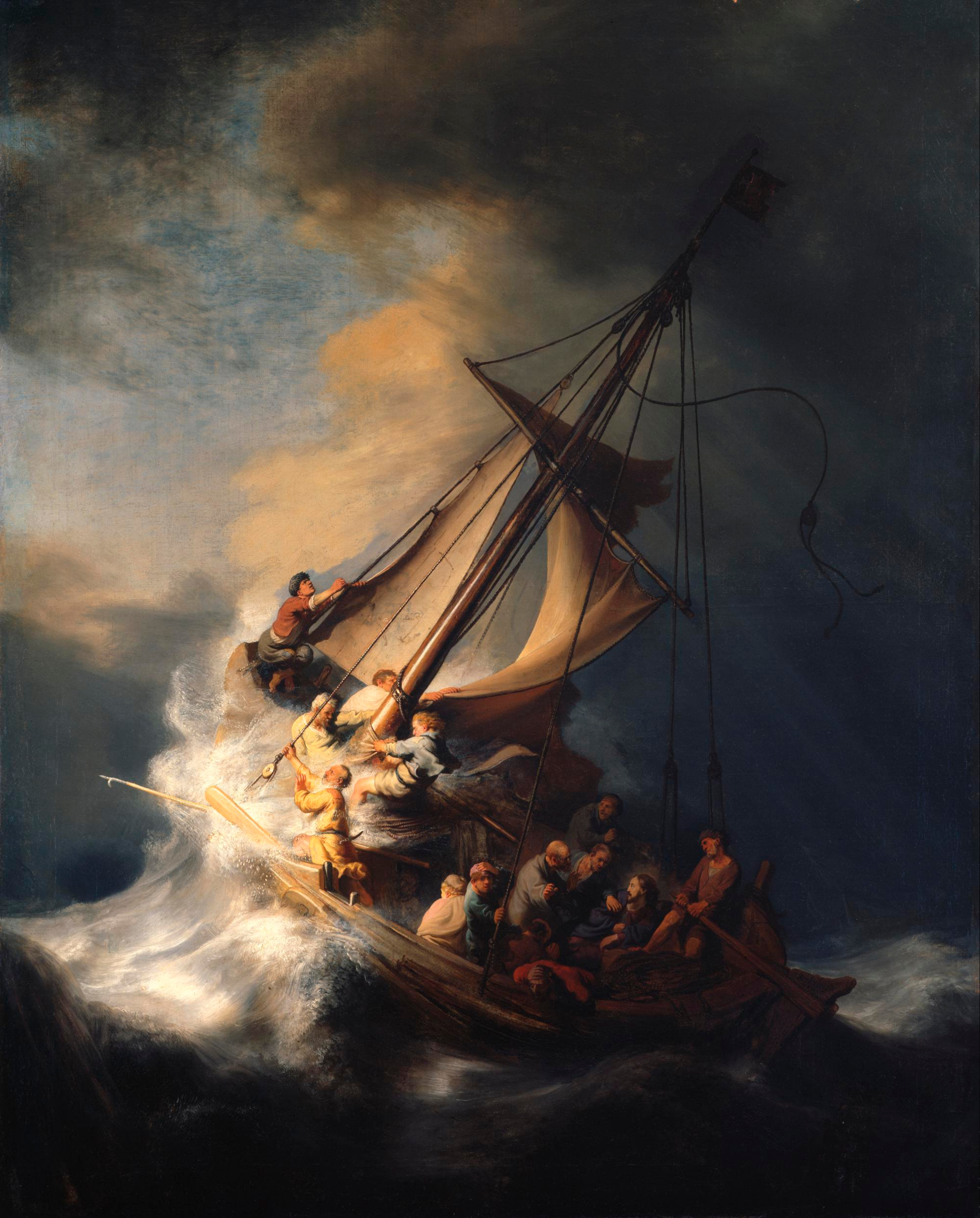
Title: The Storm on the Sea of Galilee
Author: Rembrandt
Year: 1633
Style: Baroque
Media: oil, board, canvas
Location: Isabella Stewart Gardner Museum , Boston, MA, US
The Storm on the Sea of Galilee is the only seascape ever painted by Rembrandt. It depicts Jesus calming the waves of the sea, saving the lives of the fourteen men aboard the vessel. Of these fourteen men, it is said Rembrandt included a self portrait of himself in the boat, next to Jesus and his twelve disciples. On March 18, 1990, the painting was stolen by thieves disguised as police officers. They broke into the Isabella Stewart Gardener Museum in Boston, Massachusetts, and stole this painting, along with twelve other works. The paintings have never been recovered, and it is considered the biggest art theft in history. The empty frames of the paintings still hang in their original location, waiting to be recovered.
 European Culture